From the workbench
Why Great Banjo Tone Begins at the Nut
The nut is small, but every open string depends on it.
The short answer
Every open note begins at the nut, so even a small problem there can be heard and felt. Each slot must fit its string, hold it at the right height, and guide it smoothly toward the tuner. When that contact is wrong, the banjo may buzz, bind, play sharp, or lose clarity, sustain, and power.
When a banjo comes to my bench with a weak, buzzy, or unsettled open string, the nut is one of the first places I look. A properly made nut supports each string at the correct height, gives it one clean starting point, and guides it smoothly toward its tuner. When those details are right, open strings ring clearly and the banjo feels comfortable near the first few frets.
Five things a good banjo nut must get right
There are five basic things I look for when evaluating a nut:
- Each slot must fit its string without pinching it or allowing it to move around.
- The strings must sit at the correct height above the first fret.
- Each string needs a clean, precise contact point at the fingerboard edge.
- The slot must follow the string’s natural path toward its tuner.
- The finished slot must be smooth, clean, and free of sharp edges.
Each of these details matters, but none of them works alone. The nut has to work in balance with the neck, frets, bridge, and strings. That’s why I always look at the nut as part of the complete setup—making sure everything works together so the banjo feels comfortable, responds freely, and sounds its best.
How does the nut affect banjo tone?
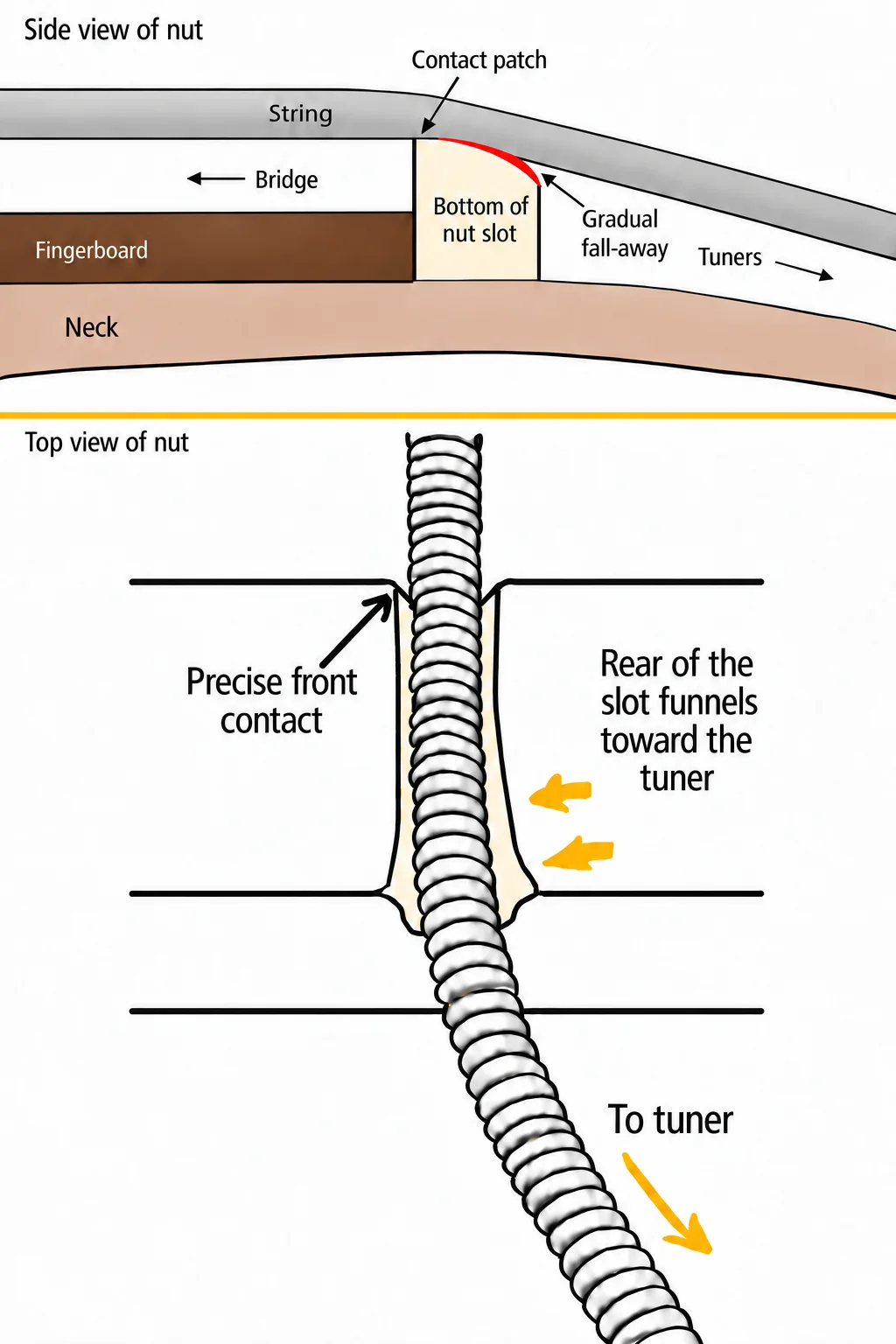
For an open string to ring clearly, its vibrating length must begin at the front edge of the nut and end at the leading face of the bridge. From that point, the bottom of the nut slot should fall away toward the peghead.
If the string also touches the middle or rear of the slot, the starting point becomes less clearly defined. That can produce a dull attack, a fuzzy overtone, a sitar-like sound, or an open note that never quite settles.
The rear of the slot matters too. The four strings do not travel in perfectly parallel lines after they leave the nut. Each one heads toward its own tuner.
I shape the back of each slot so it opens gently in the same direction the string naturally wants to travel. Think of it as a small funnel. The front remains precise and supportive, while the rear gives the string a smooth path toward the tuner.
If you hear a small ping while tuning, or the pitch seems to jump rather than move smoothly, the string may be catching somewhere in the slot.
 View larger image
How should a banjo nut slot fit the string?
That transition at the front of the nut slot has to be carefully balanced. The string needs a small, clean area of bone supporting it as it leaves the nut—not a sharp knife-edge that can wear away within days. Too much supporting material, or a transition shaped at the wrong angle, can interfere with the string and contribute to buzzing, dull open notes, and poor tuning response. The goal is a durable, clearly defined contact point followed by a smooth, gradual fall-away toward the tuner.
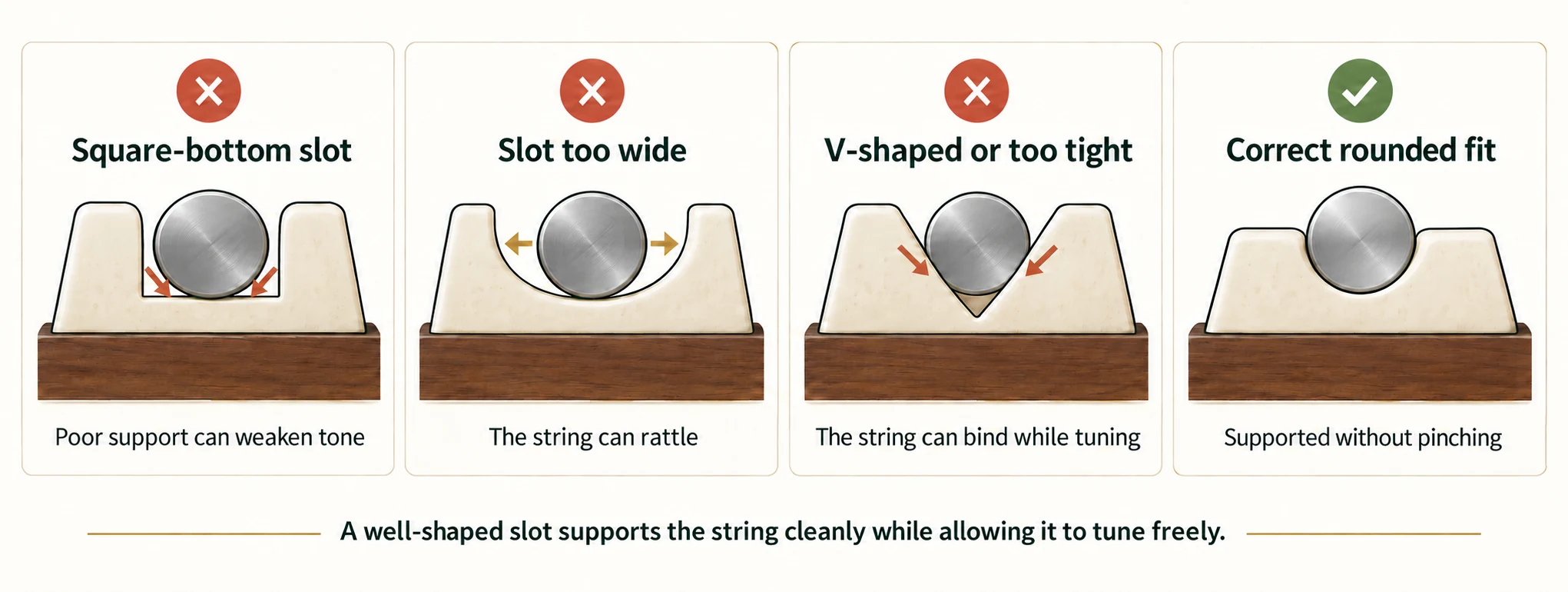
A nut slot should be just wide enough to support the string without gripping it.
A narrow slot can pinch the string or prevent it from settling fully into the bottom. The tuner may keep turning while the pitch barely changes, followed by a sudden jump when the string finally breaks free.
A slot that is too wide can create a different problem. The string may move from side to side or rattle against the walls of the slot. That movement can weaken the attack and make the open note sound less focused.
String height is just as important. If a slot is too high, the string feels stiff near the nut and must be pushed farther to reach the fret. That extra movement can pull first-position notes sharp. If the slot is too low, the open string may strike the first fret and buzz.
Changing string gauges can also reveal problems. A slot that worked with one set of strings may pinch a heavier string or fail to support a lighter one properly.
Once the slots reach their final depth, I also shape the top of the nut so the strings are supported without being buried beneath unnecessary material. The goal is secure support with a clear, smooth path through the nut.
 View larger image
The nut must fit the neck
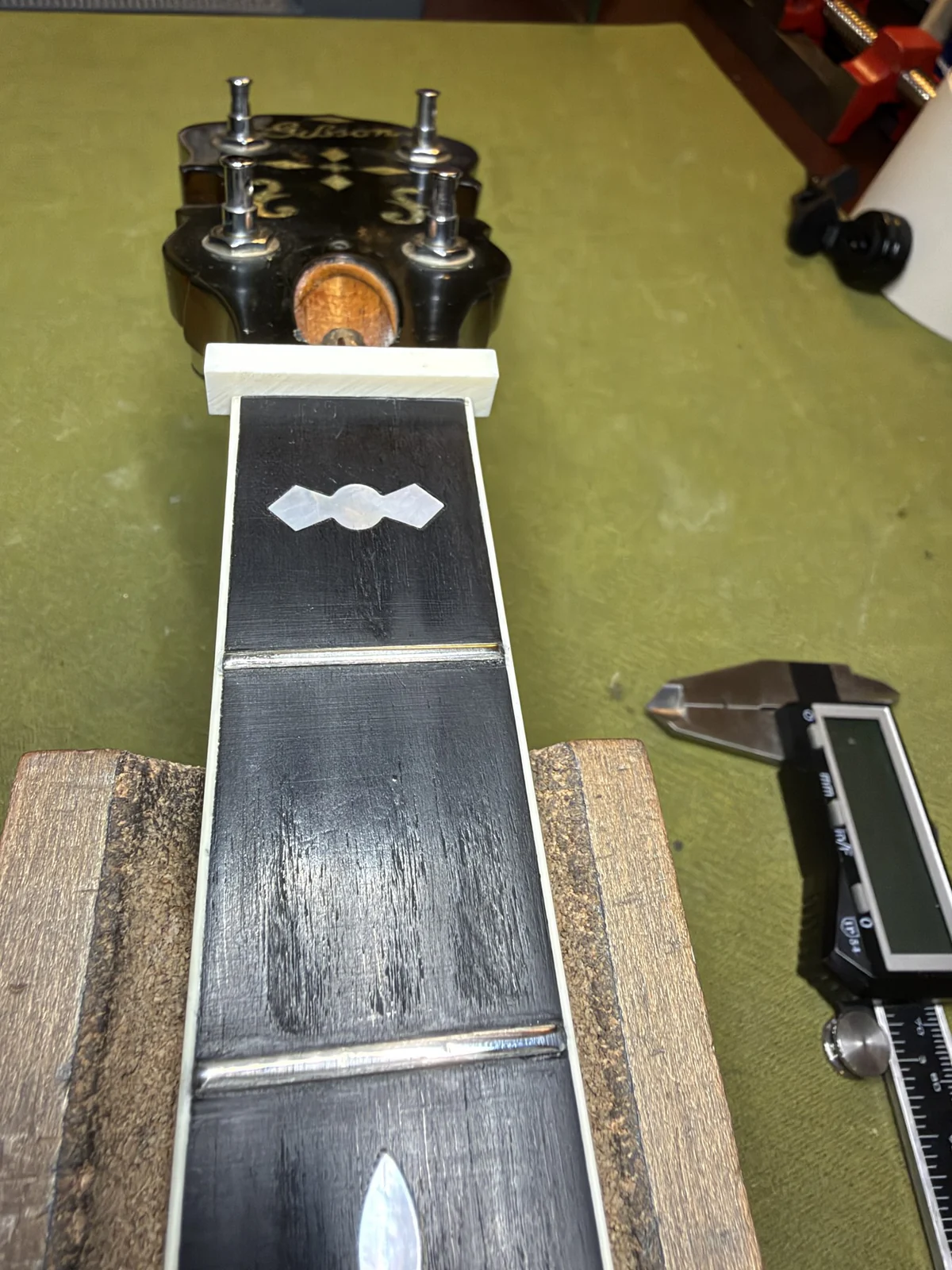
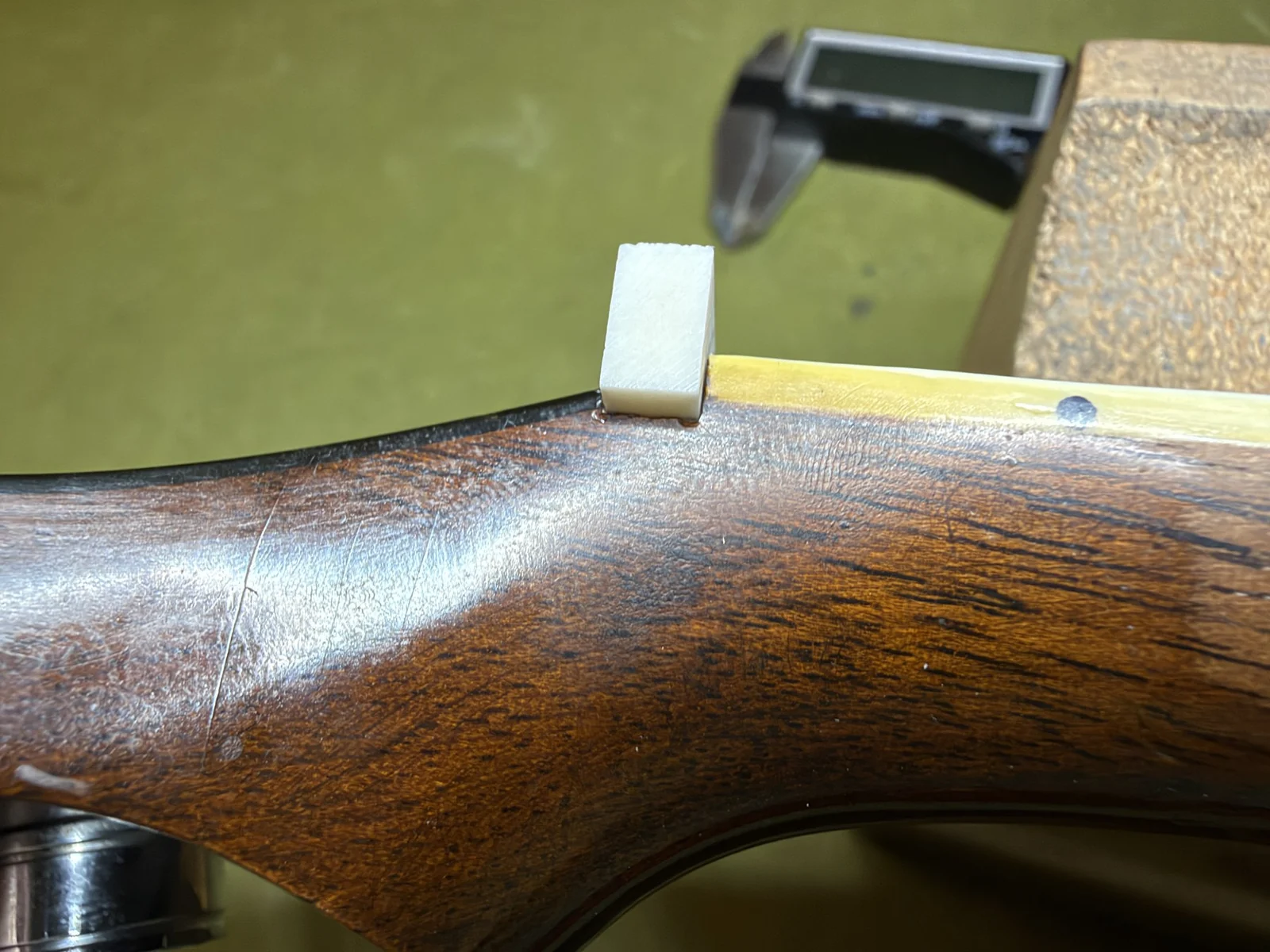
A new nut should be fitted to the neck beneath it, not simply shaped until it fills the space.
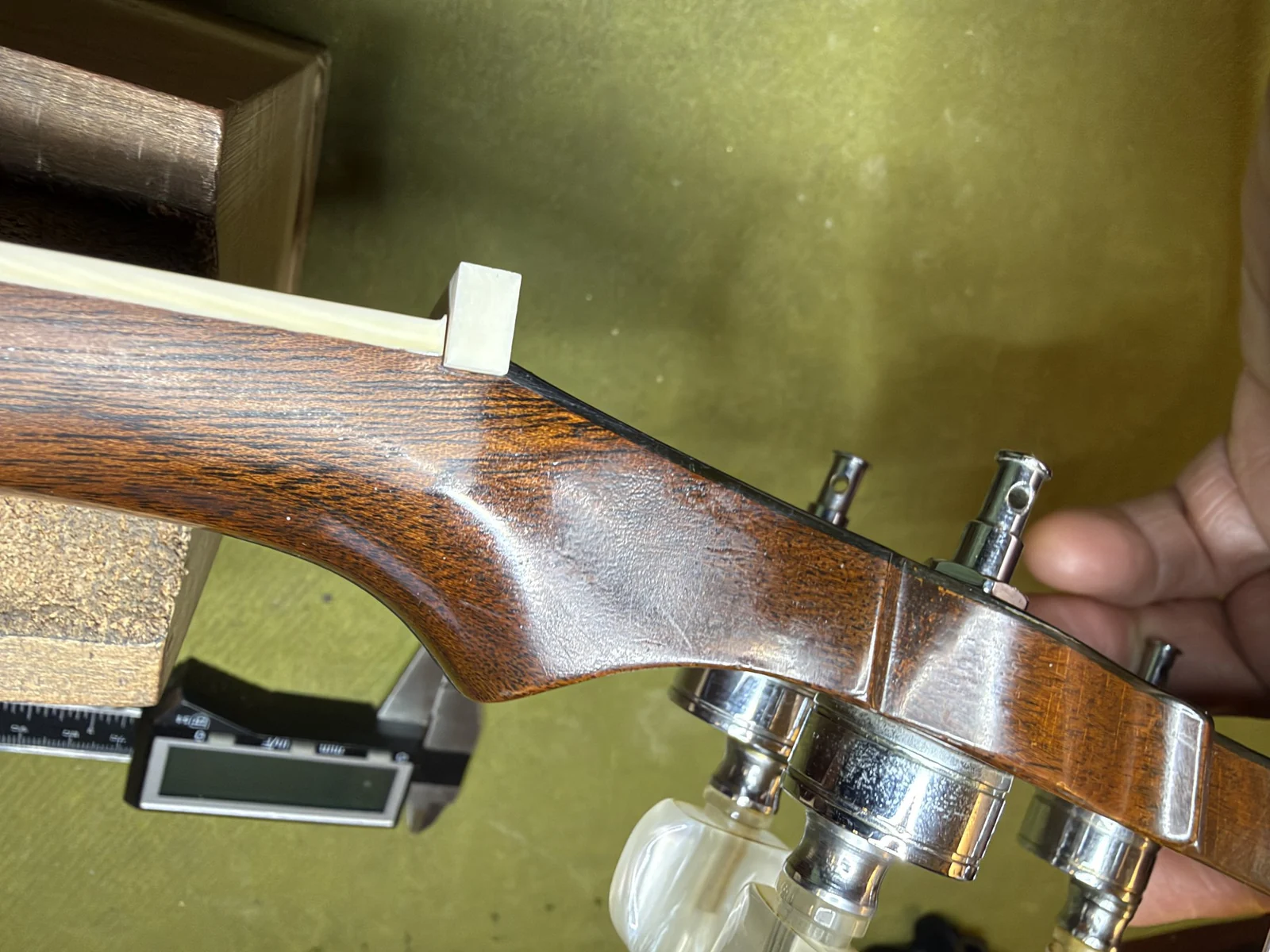
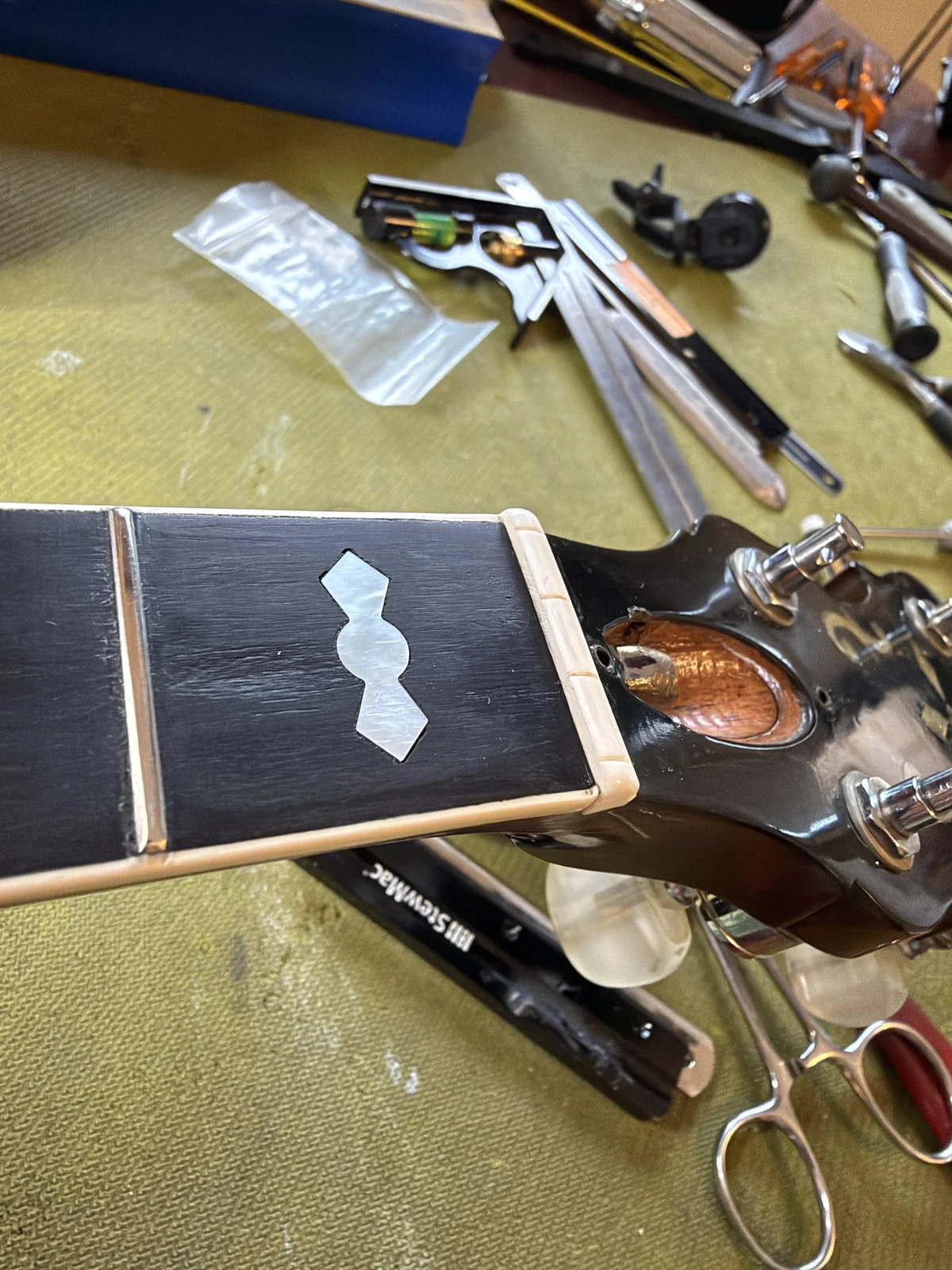
I begin with an oversized blank and carefully fit its bottom and adjoining surfaces to the actual nut seat. The finished nut should sit securely without rocking or leaving visible gaps. Glue should only keep a properly fitted nut in place. It should not be used to fill an imperfect fit.
A loose or unevenly supported nut can contribute to buzzing, inconsistent response, and weak open strings. A solid fit gives the strings a dependable foundation and can help restore clarity, sustain, and projection.
The photographs below show this progression. The bone blank begins oversized. It is gradually fitted and shaped to the neck before the four string slots are brought to their final heights and widths as part of the complete setup.
Bone is my preferred material for many banjos because it is hard, durable, and capable of producing a clear, lively response. Quality synthetic materials can also work well. In my experience, however, the accuracy of the fit and workmanship matters more than the name of the material.
 View larger image
 View larger image
 View larger image
 View larger image
The fifth string is different
Only four strings pass through the main nut. The fifth string begins farther up the neck and has its own relationship with the pip, fifth fret, tuner, and capo spikes.
On some banjos, the pip establishes the height and starting point of the fifth string. On others, the pip mainly guides the string while the fifth fret becomes its true contact point.
Either arrangement can work when it is set up correctly. What matters is that the fifth string sits at the right height, plays cleanly, and does not pull unnecessarily sharp when it is fretted or placed under a spike.
What are the signs that a banjo nut needs attention?
- An open string buzzes or rattles but sounds clean when fretted
- One open string sounds duller or weaker than the others
- A string catches, jumps, or pings while tuning
- First-position chords sound sharp even though the open strings are in tune
- The strings feel unusually stiff near the first fret
- A slot looks worn, chipped, widened, or dirty
- The nut rocks or has a visible gap beneath it
These are clues, not a complete diagnosis. High or uneven frets, incorrect neck relief, worn strings, bridge problems, and other loose parts can produce similar sounds.
When I hear a problem at the nut, I do not reach for a file until I understand what the rest of the banjo is doing. Nut work permanently removes material, and a few thousandths of an inch can be the difference between a clean note and a buzz.
The nut is part of the complete setup
Great banjo tone never comes from one component by itself. The nut, frets, neck, bridge, head, tailpiece, rim, tone ring or hoop, resonator, strings, and player all affect one another.
But every open note begins at the nut. If that starting point is unstable or poorly defined, the rest of the banjo is being asked to compensate.
A properly fitted and carefully shaped nut allows the strings to ring more freely, makes tuning more predictable, and helps reveal the tone that is already present in the instrument.