Tone, playability & performance

Understanding Your Banjo

Most players know when their banjo no longer sounds or feels quite right, even if they cannot explain why. That is completely normal. A banjo is a complex mechanical and musical system, and many setup changes happen so gradually that players simply adjust to them.

Some things are simple to check on your own, and learning how different adjustments affect your banjo’s tone and playability is a wonderful place to begin. Other work—such as making and fitting a new nut or bringing the frets into a smooth, level playing surface—requires specialized tools, a practiced eye, and the kind of knowledge that only comes from years at the workbench.

Start With What You Are Hearing and Feeling

You do not need to be a setup technician or identify the cause before asking for help. Begin with the change you have noticed, the way the banjo feels beneath your hands, and what you wish it would do better.

Evaluation & Care

How Do I Know When My Banjo Needs a Setup?

A banjo usually gives you small clues before it becomes difficult to play. Learn what changes in feel, tuning, tone, and response may be telling you.

Explore this topic
Playability

Why Does My Banjo Buzz?

A banjo buzz usually leaves clues. Learn what its location and timing may be telling you—and why simply raising the action is rarely the complete answer.

Explore this topic
Tuning & Intonation

Why Won’t My Banjo Stay in Tune?

Learn to separate tuning stability, intonation, and capo problems—and understand how the nut, bridge, head, action, strings, and hardware work together.

Explore this topic
Tone & Response

Why Does My Banjo Sound Dull, Tubby, or Weak?

Learn how strings, head tension, bridge condition, tailpiece pressure, neck and heel fit, and setup balance can affect clarity, sustain, projection, and power.

Explore this topic
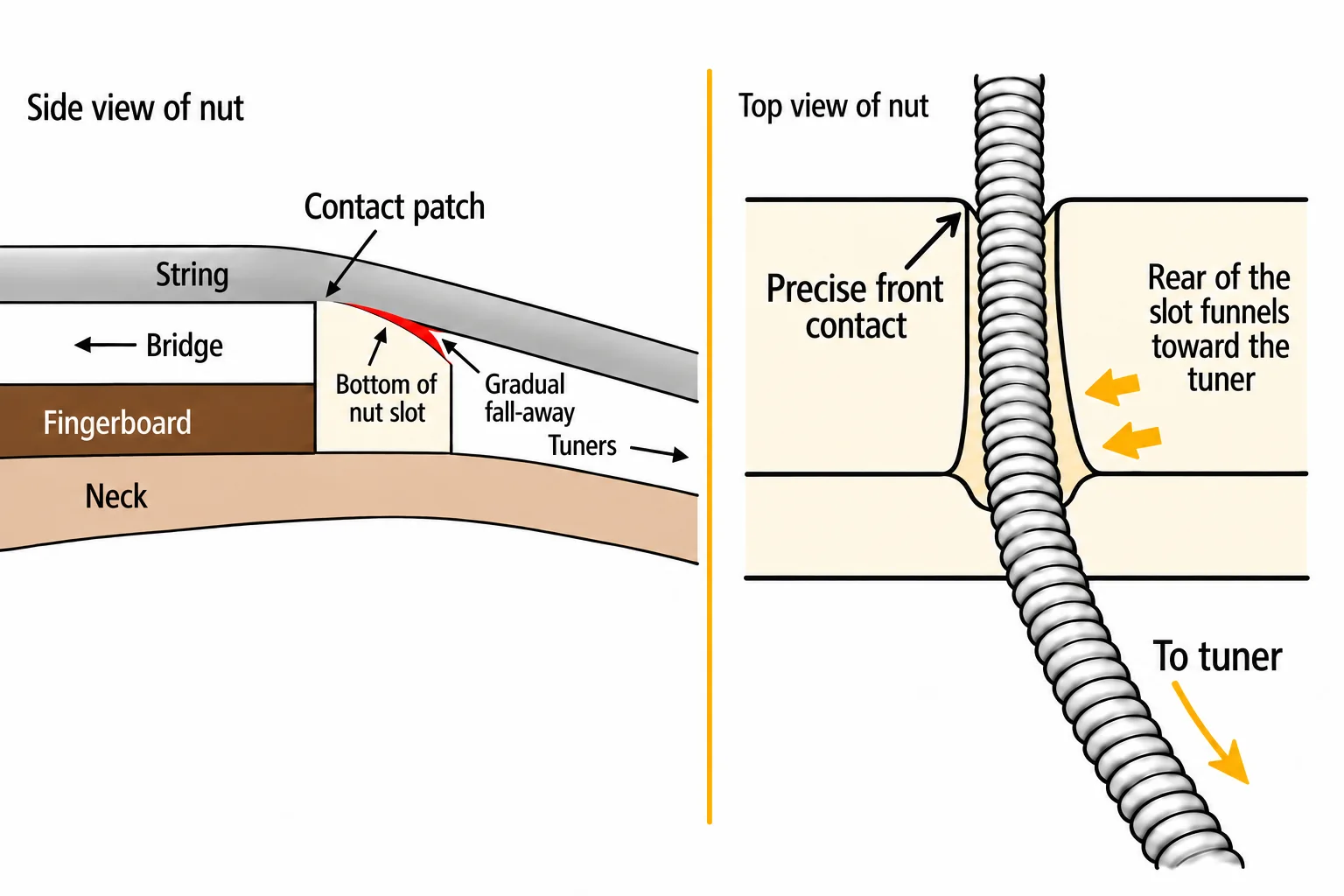
Side and top views of a banjo nut showing the short front contact area and gradual fall-away toward the tunerTone, Tuning & Playability

Why Great Banjo Tone Begins at the Nut

Learn how nut-slot depth, width, shape, break angle, wear, and fit affect a banjo’s open-string tone, tuning, intonation, projection, and playing feel.

Explore this topic
Tone, Tuning & Playability

How Neck Relief Affects Banjo Tone and Note Clarity

Learn why banjo neck relief affects buzzing, note clarity, sustain, intonation, playing effort, and how freely the instrument responds across the fretboard.

Explore this topic
Tone, Tuning & Playability

Why Banjo Neck-to-Rim Fit Matters

Learn how banjo heel fit and neck angle affect bridge height, action, alignment, tuning stability, vibration, tone, and the balance of the complete instrument.

Explore this topic
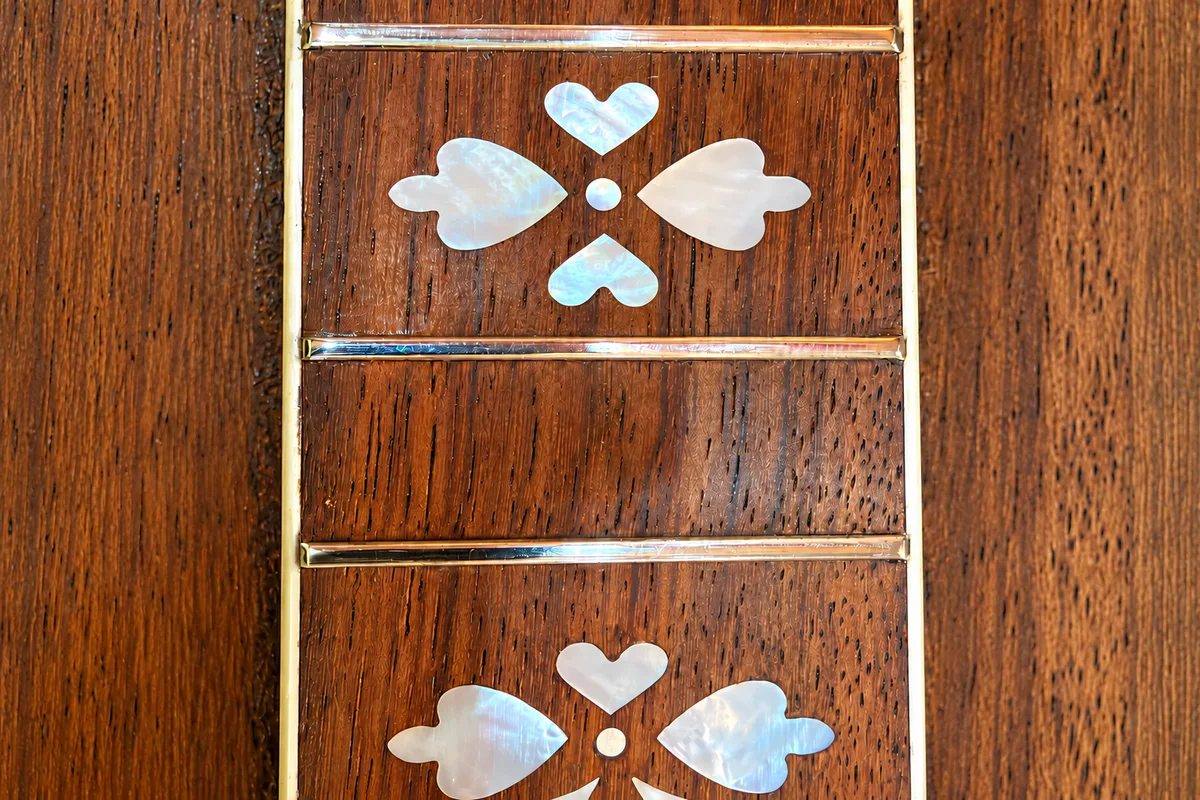
Finished banjo frets with smooth, accurately crowned and hand-polished playing surfacesNeck, Frets & Playability

Why Your Banjo’s Fretwork Has to Be Right

Learn how loose, uneven, worn, or poorly crowned banjo frets can cause buzzing and intonation problems—and when fret dressing or a complete refret is the right repair.

Explore this topic
Heads, Tone & Care

How Does the Banjo Head Affect Tone?

Learn how head material, film thickness, surface coating, crown height, condition, and tension influence a banjo's warmth, clarity, sustain, response, and power.

Explore this topic
Heads, Tone & Care

Why Correct Banjo Head Tension Matters

Learn why small changes across the G♯ range can give a banjo a warmer old-time voice, balanced clarity, or the quick, focused response favored for progressive and hard-driving bluegrass.

Explore this topic
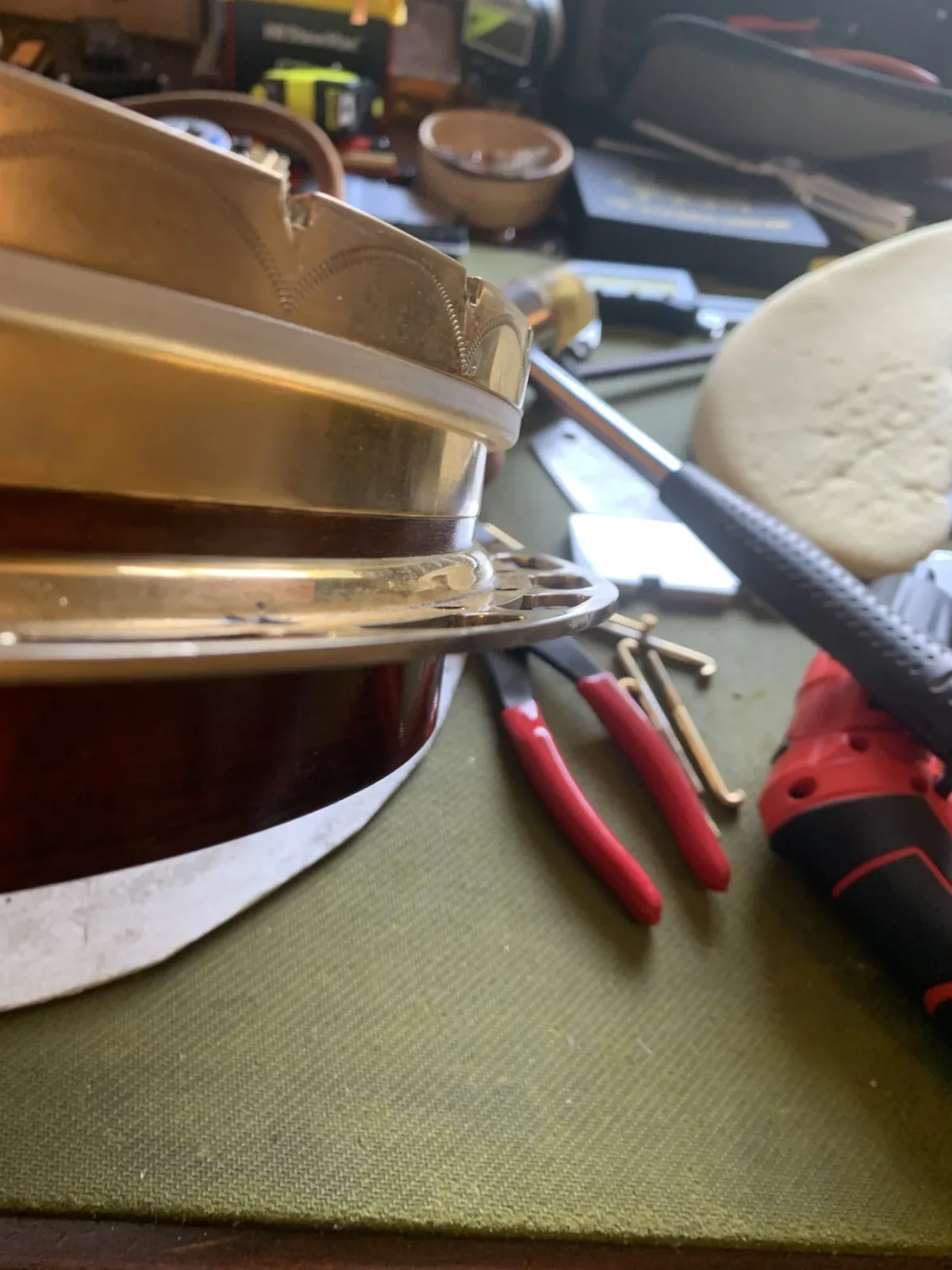
Severe upward warping in the original one-piece flange of a 1929 Gibson GranadaVintage Banjos & Preservation

Why Do Prewar Gibson Banjo Flanges Warp or Pull Up?

Learn why prewar Gibson one-piece “pot metal” banjo flanges can pull upward, warp, crack, or break, how to recognize the warning signs, and why careful evaluation matters.

Explore this topic
Care & Adjustment

Tinkering With Your Banjo Can Be Really Fun. It Can Also Be Really Frustrating.

Understand why a helpful individual adjustment may affect several other parts of the banjo—and what makes a professionally dialed-in setup different.

Explore this topic

Learn what your banjo is telling you

Understanding Your Banjo Is a Good Place to Begin

Learning how your banjo responds is part of the fun of playing it. A little careful observation—and a few simple checks—can often help you understand what has changed and what may need attention.

Don’t Be Afraid to Tinker With Your Banjo

Banjo players have always learned by experimenting with strings, bridges, heads, tailpieces, and small adjustments. You can discover a great deal on your own, especially when you write down where you started, change only one thing at a time, and give the banjo a chance to settle before deciding what the change accomplished.

These articles are here to help you recognize common patterns, try a few sensible checks, and make better-informed decisions about your instrument. Sometimes a simple correction is all that is needed. Other times, what you find may suggest that several parts of the banjo are affecting one another and that a more complete evaluation would be helpful.

A setup—and a record—made for you

A professional setup brings the whole banjo into balance around your touch, technique, preferred tone, playing style, and the way you want the instrument to feel beneath your hands.

When the work is complete, you receive a Personal Setup Profile documenting the important measurements, components, adjustments, and choices that make the finished setup a good match for you. It creates a clear baseline for future maintenance, seasonal changes, and careful experimentation.

Sample Personal Setup Profile showing before and after banjo measurements, why each item needed attention, and the completed adjustments View the full setup record
A sample Personal Setup ProfileSee how the before-and-after measurements, observations, and completed adjustments are documented for the owner.
Open the sample PDF
Enlarged sample Personal Setup Profile

Sample setup record showing the measurements, observations, and completed adjustments provided to the owner.

From understanding to action

Still wondering what your banjo needs?

You do not need to diagnose it yourself. Tell me what you are hearing and feeling, and we can begin with your instrument and your goals.

Tell me about your banjo No obligation—just a friendly place to begin.