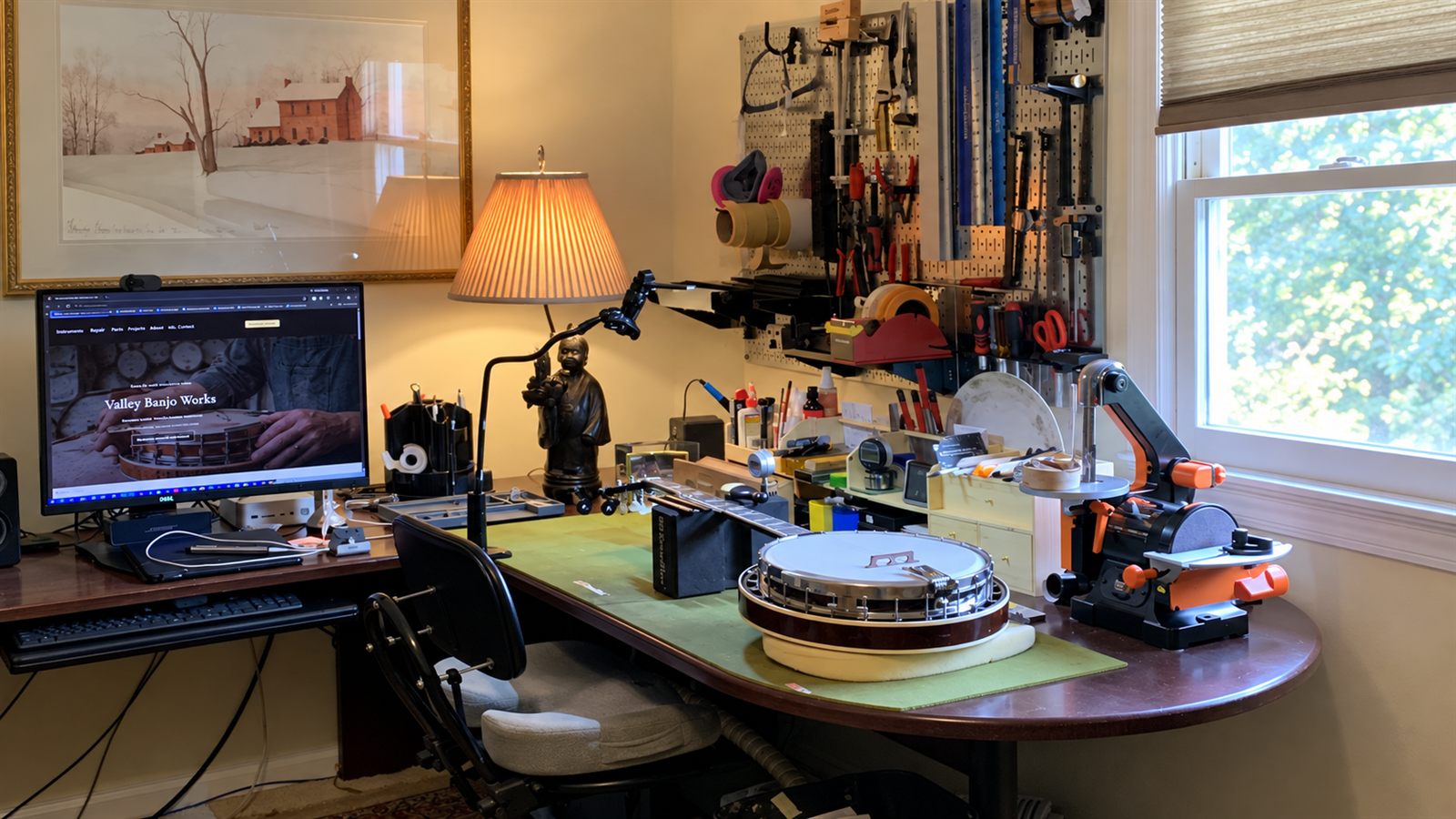
Kent “Boo” Gorsuch
Banjo-FocusedLuthierSetup Specialist
- Tone
- Playability
- Tuning Stability
- Intonation
50+ years of playing, teaching, and setting up banjos
Have a banjo you’d like help with? Start a conversation
The Difference a Banjo-Focused Luthier and Setup Specialist Makes
A banjo is a remarkably responsive instrument. It also has nearly 100 individual parts, many of them adjustable. When those parts drift out of balance, players often adapt without realizing how much tone, comfort, and response the instrument has lost.
At the bench, I often see the same pattern: unstable tuning, notes that play sharp, action that feels too high or low, buzzing or dead spots, and a banjo that takes more effort to play than it should.
I begin by listening—to the player and to the banjo. Rather than chasing one measurement or changing parts at random, I evaluate how the neck, frets, head, bridge, hardware, and tone chamber are working together. The goal is a banjo that feels comfortable, stays in tune, and gives you the clarity, power, and response you are looking for.
The difference can be heard and felt in its:
- Tone
- Tuning stability
- Intonation
- Playability
- Response
- Feel
“A great setup is the result of harmony and balance. Each subtle adjustment helps the next, until the banjo begins to open up, vibrate freely, and respond with amazing tone, clarity, and power.”Learn About My Setup Process
Setup Tailored to the Player
Every player has a different touch, a sound of their own, and a unique way of approaching the banjo. Before I adjust anything, I want to know how you play, what sound you are looking for, and what your goals are for the banjo and your music.
The right setup should feel natural and easy—everything should simply flow. When a setup is dialed in around the player’s touch, sound, and goals, the connection between the player and the instrument becomes much more personal.
I tailor setup decisions to:
- Playing Style
- Feel & Playability
- Tone & Response
“When a banjo is right, it’s hard to put down.”See Recent Work
Featured from the Workbench
Bill Evans’ 1929 Gibson Granada
See how careful evaluation, preservation, and setup returned this historic prewar banjo to reliable professional playing condition while protecting its original pot and fragile gold-plated hardware.
See Bill Evans’ Granada ProjectBanjo Tone & Response
Great banjo tone rarely comes from changing one part or chasing a single number. I listen to how head tension, the bridge, tailpiece, neck-to-rim fit, and the rest of the pot are working together. From there, I make careful, measured adjustments around the player’s touch and the sound they are looking for.
Measurements help me understand the instrument. My ears and hands tell me when it is beginning to open up, respond freely, and sound balanced from the fourth string to the highest notes.
“The numbers give me a starting point. The banjo tells me when everything is working together.”Explore Banjo Tone & Response
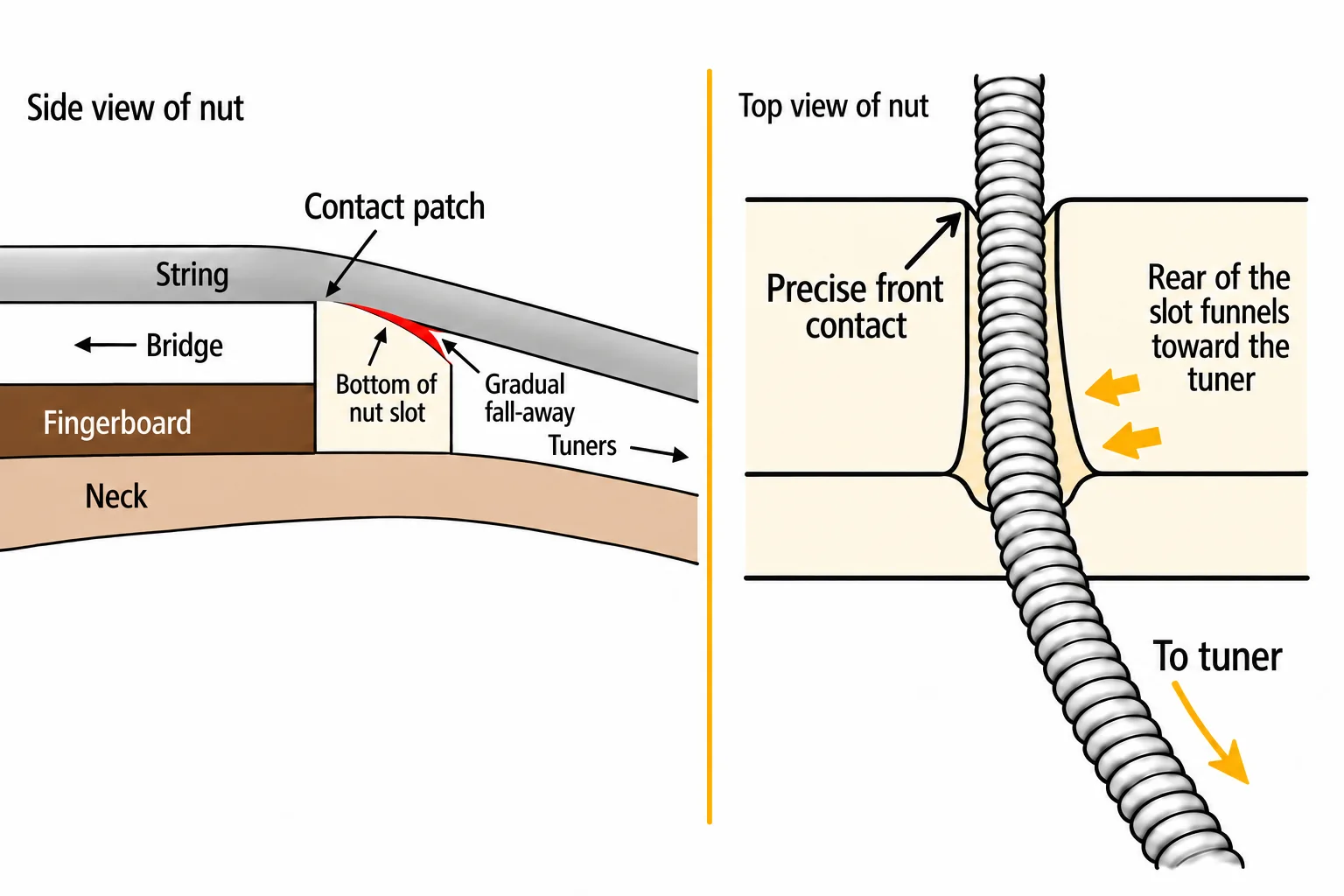 A clean front contact gives the string a clear starting point, while the carefully shaped fall-away guides it smoothly toward the tuner.
Understanding Your Banjo
Great Tone Starts at the Nut
The nut is small, but every open string depends on it. When the slots fit correctly and the contact points are clean, the strings ring more freely, tune more predictably, and feel better in the first position.
See Why the Nut MattersDoes your banjo have any of these common issues?
- Will not stay in tune
- Action too high or low
- Buzzing
- Poor intonation
- Capo tuning problems
- Muddy, thin, harsh, or weak tone
- Weak fourth string
- Lack of clarity up the neck
- Poor volume or projection
You do not need to know exactly what is wrong. Tell me what you are hearing and feeling, and we can start there.
Most conversations begin simply: what changed, when you notice it, and what you wish the banjo did better. From there, I can help you decide whether the instrument needs a closer look.
If you would like to bring your banjo to my Waynesboro shop, I am happy to look it over and share my recommendations at no charge. If you are not local, you are welcome to ship it, but please contact me first so we can talk through the instrument and the safest way to send it.
Where it began
A Curiosity That Started Early
Read how it all began“Within 24 hours of getting my first banjo, I had taken it completely apart—and had no idea how to put it back together. I was only seven or eight years old, and I’ve been fascinated with how a banjo works ever since.”
Banjo Setup — Local and Nationwide
My shop is in Waynesboro, Virginia, where I work with serious players and collectors from throughout the Shenandoah Valley, Staunton, Charlottesville, Harrisonburg, Richmond, Roanoke, Northern Virginia, and the surrounding states.
Whether you live nearby or are driving from farther away, the process begins the same way: with a conversation about your banjo, what you are hearing and feeling, and what you would like it to do better.
If you are not within driving distance, we can discuss shipping your banjo after that first conversation. Please contact me before sending it so I can provide the right packing and shipping instructions for your instrument.