From the workbench
Why Your Banjo’s Fretwork Has to Be Right
The frets are the user interface of the neck.
The short answer
I think of the frets as the user interface of the banjo neck. They are where your hands, the strings, and the instrument meet. When the fretwork is right, notes ring clearly, slides feel smooth, and the neck can be adjusted to suit the player. When it is not, the banjo may buzz, play out of tune, or require more effort than it should.
Good fretwork does not call attention to itself. It simply gives the rest of the setup a solid, accurate foundation.
Small differences can create noticeable problems
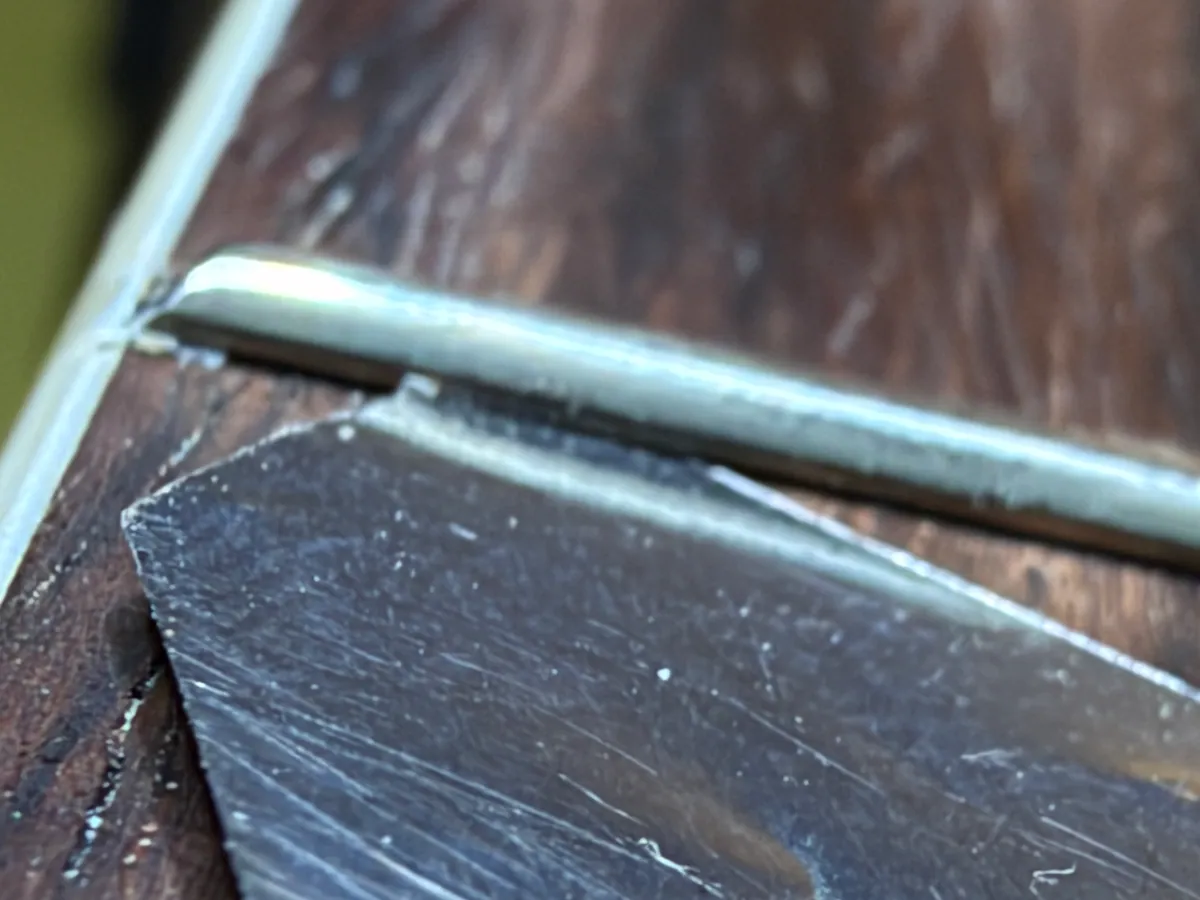
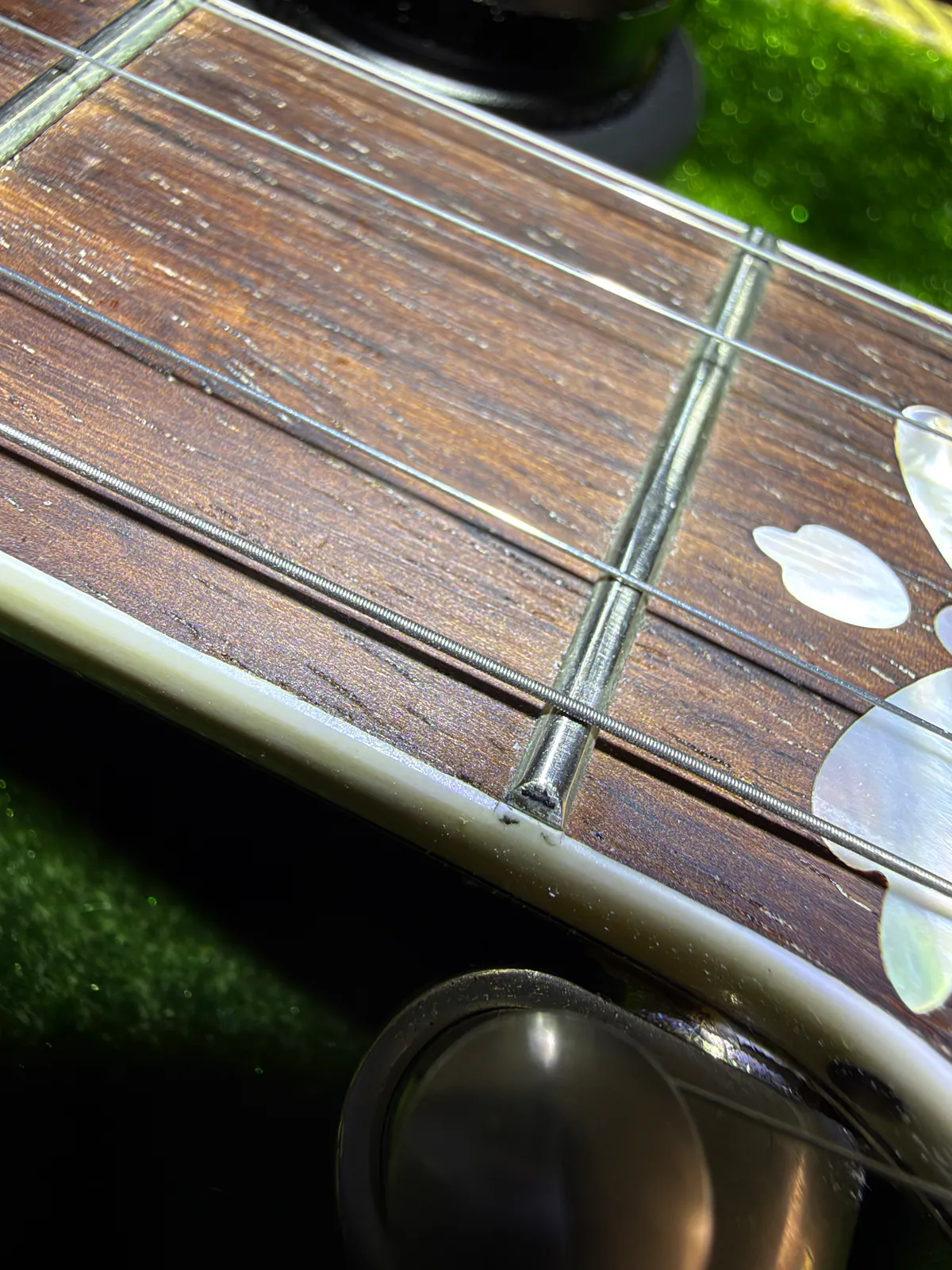
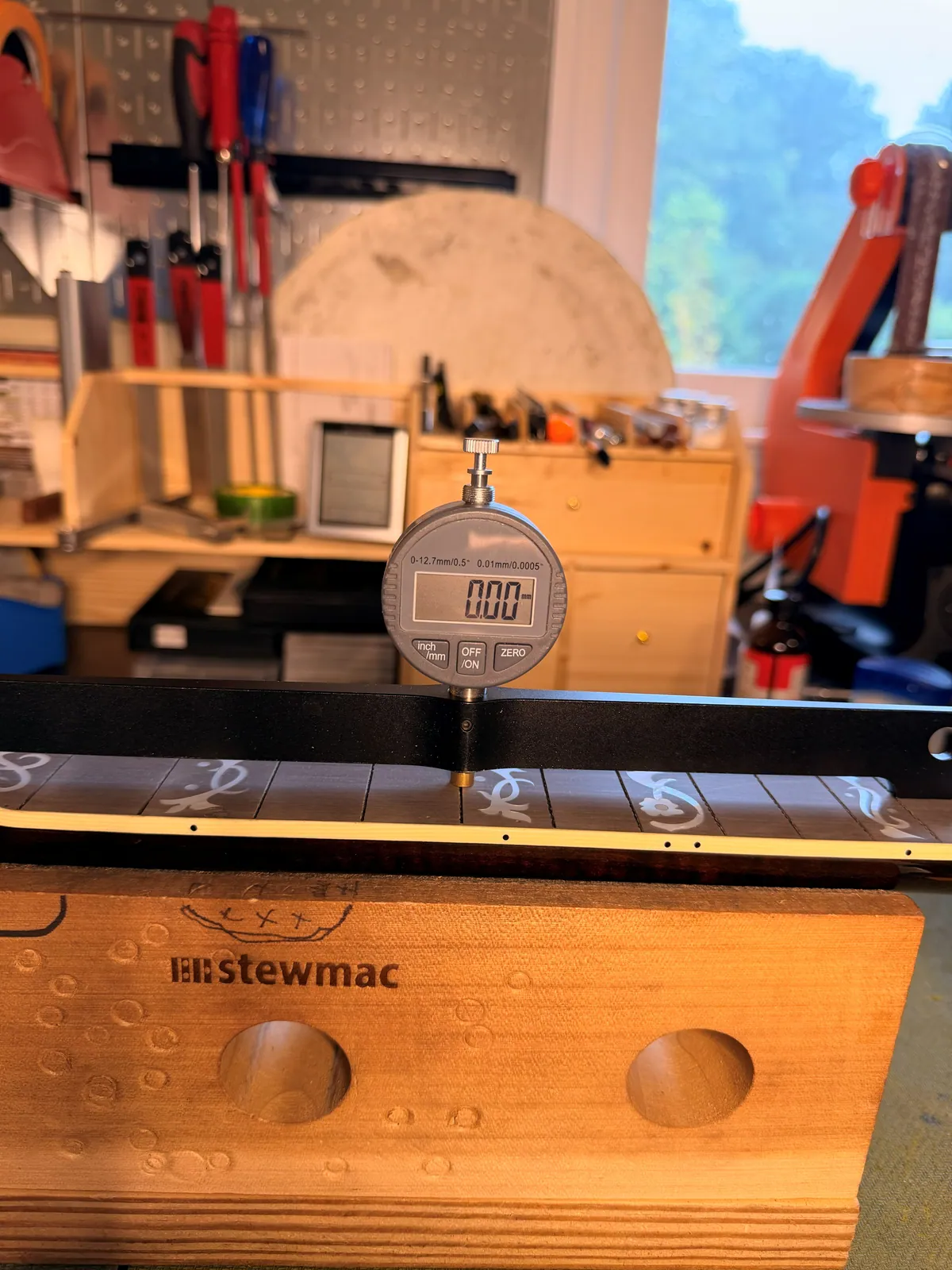
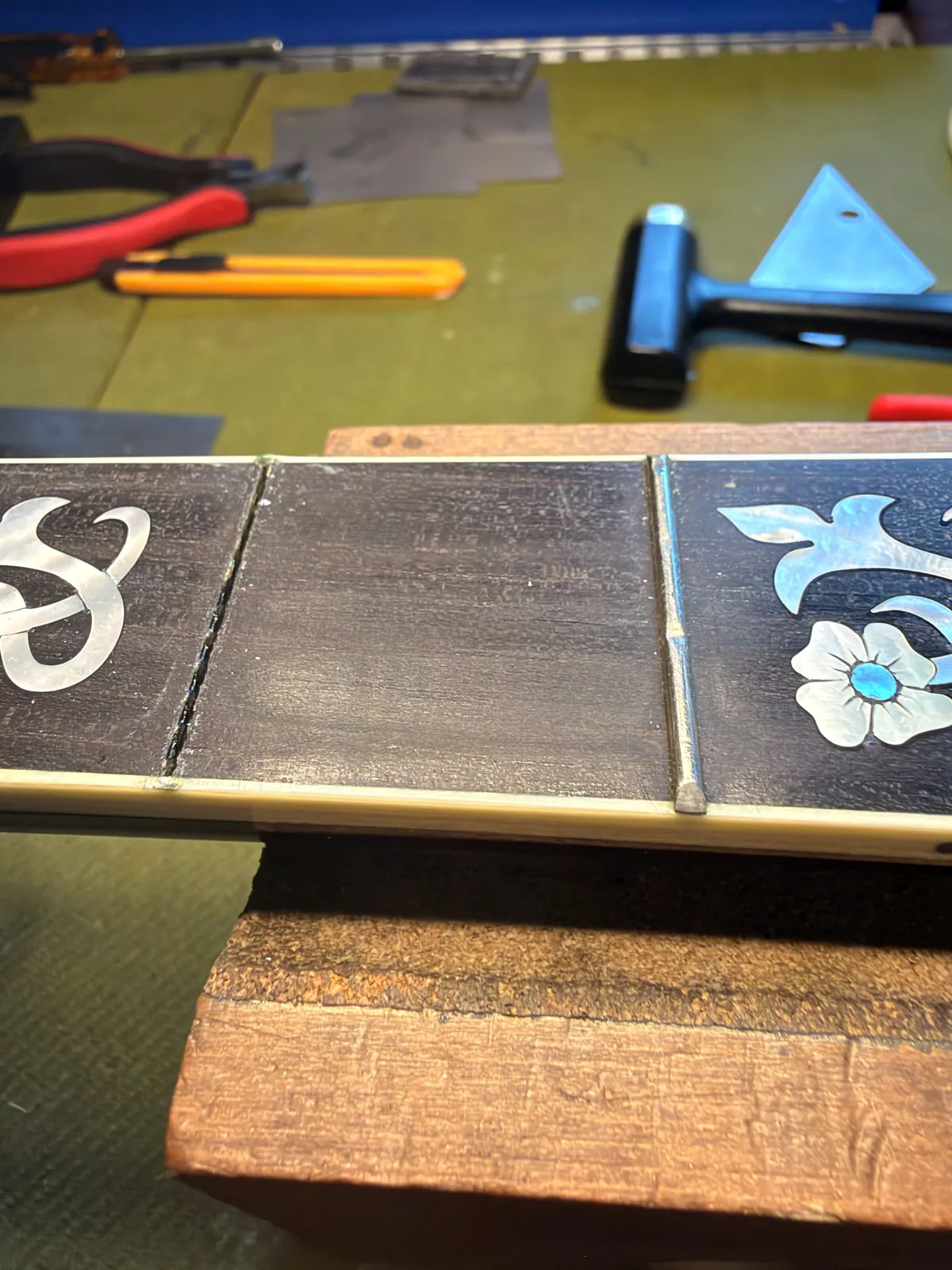
A fret does not have to be dramatically high or loose to cause trouble. In a responsive setup with comfortable action, a height difference of only one thousandth of an inch can be enough to create a localized buzz. A fret that is not fully seated can also move under pressure, making a reliable level impossible until it is stabilized.
Worn grooves create a different problem. The string sits lower on the worn fret and may strike the next one. A broad, flat, or poorly defined crown can shift the string’s contact point and affect intonation.
Fret problems often develop so gradually that a player learns to work around them—without realizing how much clarity, comfort, and responsiveness have slowly been lost.
What poor fretwork can sound and feel like
Fret problems often appear as buzzing on particular notes, weak sustain in one area of the neck, notes that play sharp or flat, a rough feeling during slides, or action that must be kept unnecessarily high to stay clean. Hammer-ons and pull-offs may lose their crispness, and the banjo can feel inconsistent from one position to the next.
Those symptoms do not automatically prove that the frets are at fault. Nut slots, neck relief, action, bridge condition, head movement, and playing technique can produce similar clues. That is why I evaluate the fretwork as part of the complete neck and setup rather than treating one noisy note in isolation.
 View larger image
 View larger image
When a fret dressing is the right repair
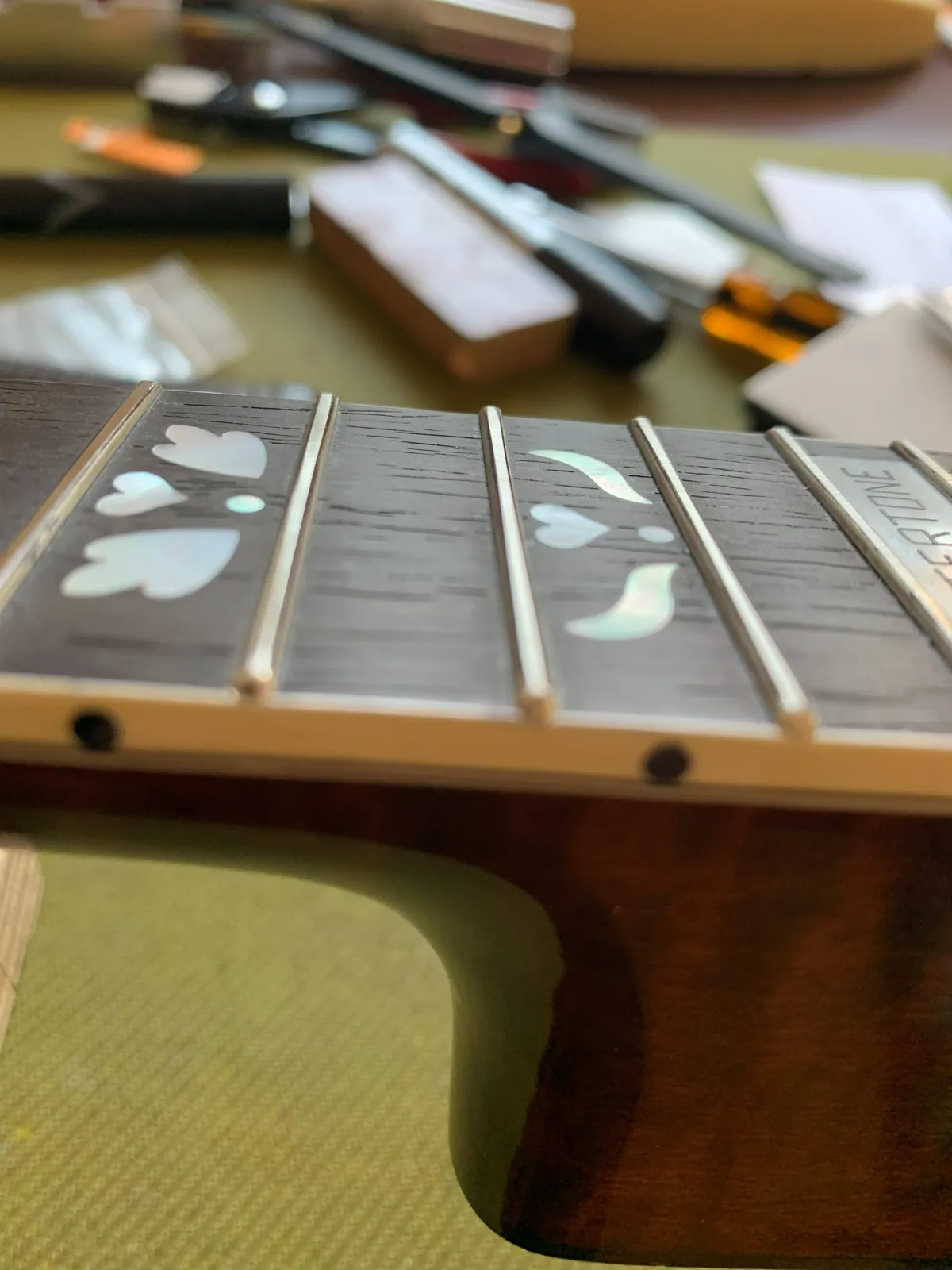
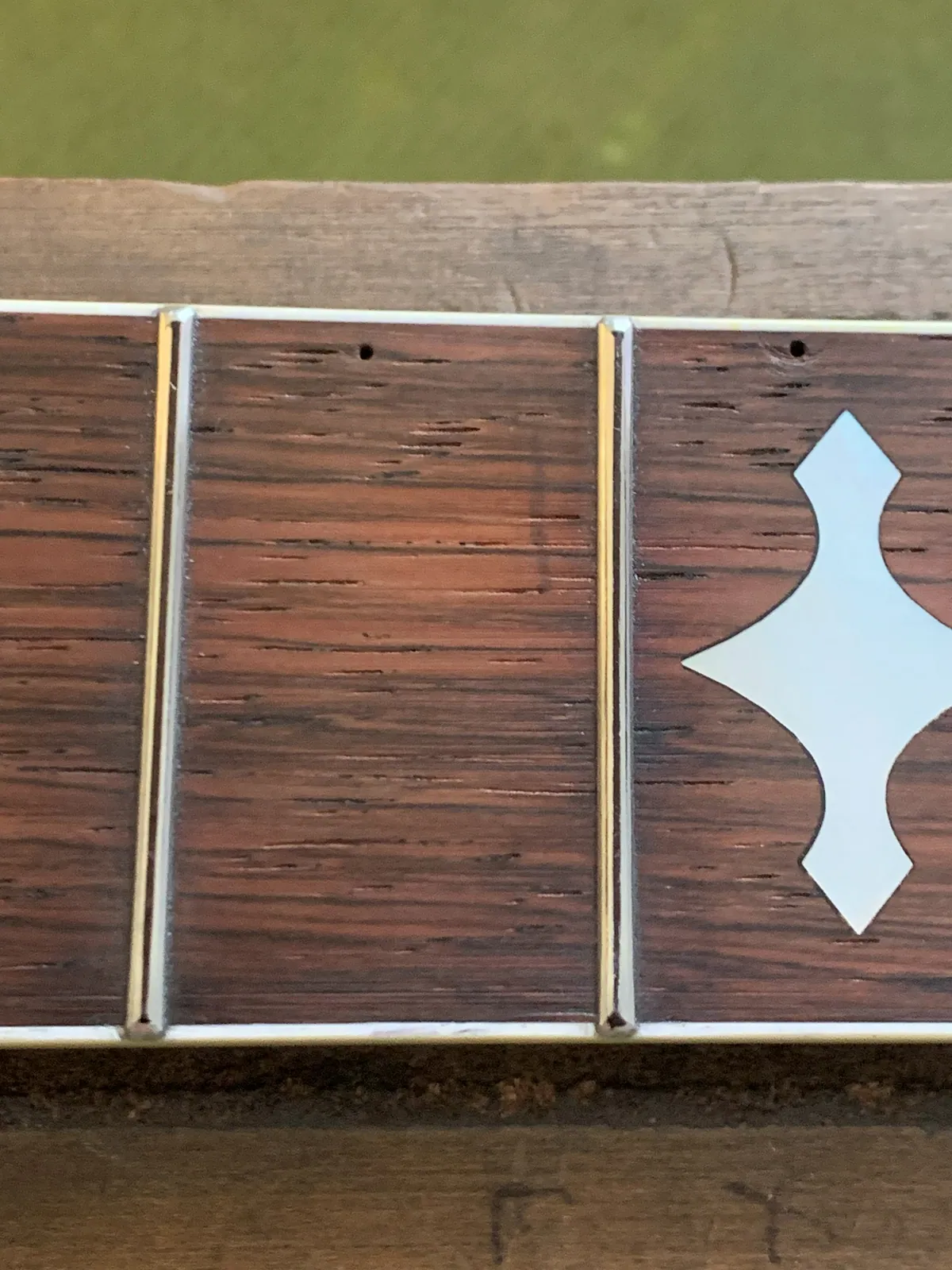
A fret dressing is often appropriate when the frets still have enough height and the wear or unevenness can be corrected without removing too much material. Any loose or raised frets must be seated and stabilized first. The frets can then be leveled as one playing surface, carefully crowned to restore a narrow and accurate string-contact point, and progressively polished until they feel smooth beneath the strings.
Leveling alone is not a finished fret job. It leaves flat areas across the tops. Crowning restores the correct shape and contact point; polishing removes the remaining tool marks and friction. Each step supports the next.
 View larger image
 View larger image
 View larger image
When it is time for new frets
A complete refret becomes the better choice when the frets are deeply grooved, already too low for another dressing, badly damaged, repeatedly loose, or uneven enough that leveling would leave too little usable height. It may also be necessary when the fingerboard itself needs correction before an accurate playing surface can be established.
During a refret, the old frets are removed carefully, the fingerboard and slots are evaluated and prepared, and each new fret is fitted and seated before the final leveling, crowning, and polishing. It is more involved than a routine dressing, but it preserves the playing quality of a good neck for many years to come.
Fretwork is the foundation of the final setup
Once the frets are stable, level, accurately crowned, and polished, the rest of the setup can be adjusted with confidence. Neck relief, nut-slot height, action, bridge relationship, and intonation can all be dialed in around the player’s touch and preferences instead of being used to hide uneven fretwork.
That is the real goal: not simply shiny frets, but a neck that feels comfortable, plays cleanly, and responds consistently from the first position to the highest notes.
 View larger image
 View larger image
 View larger image
 View larger image
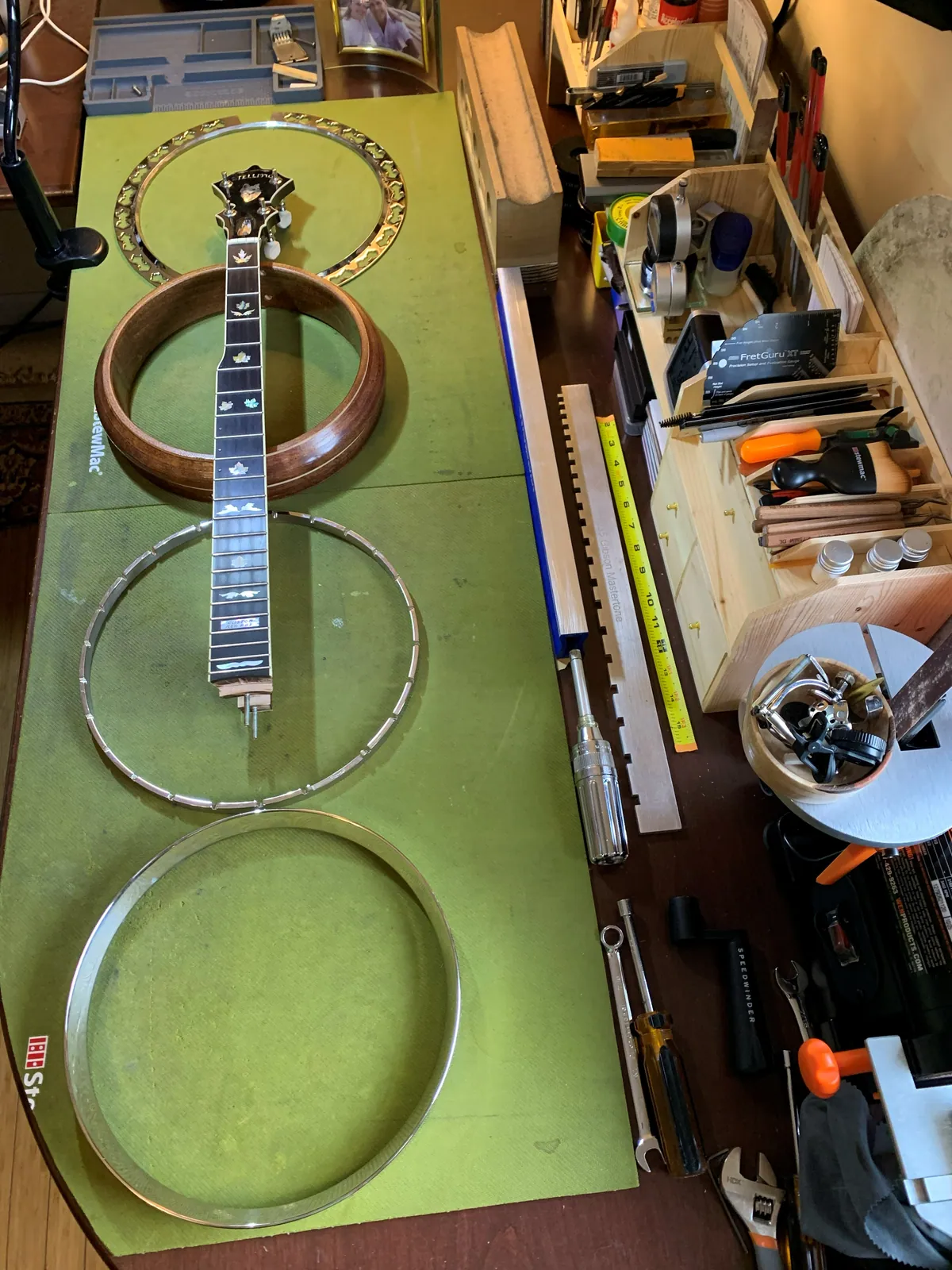
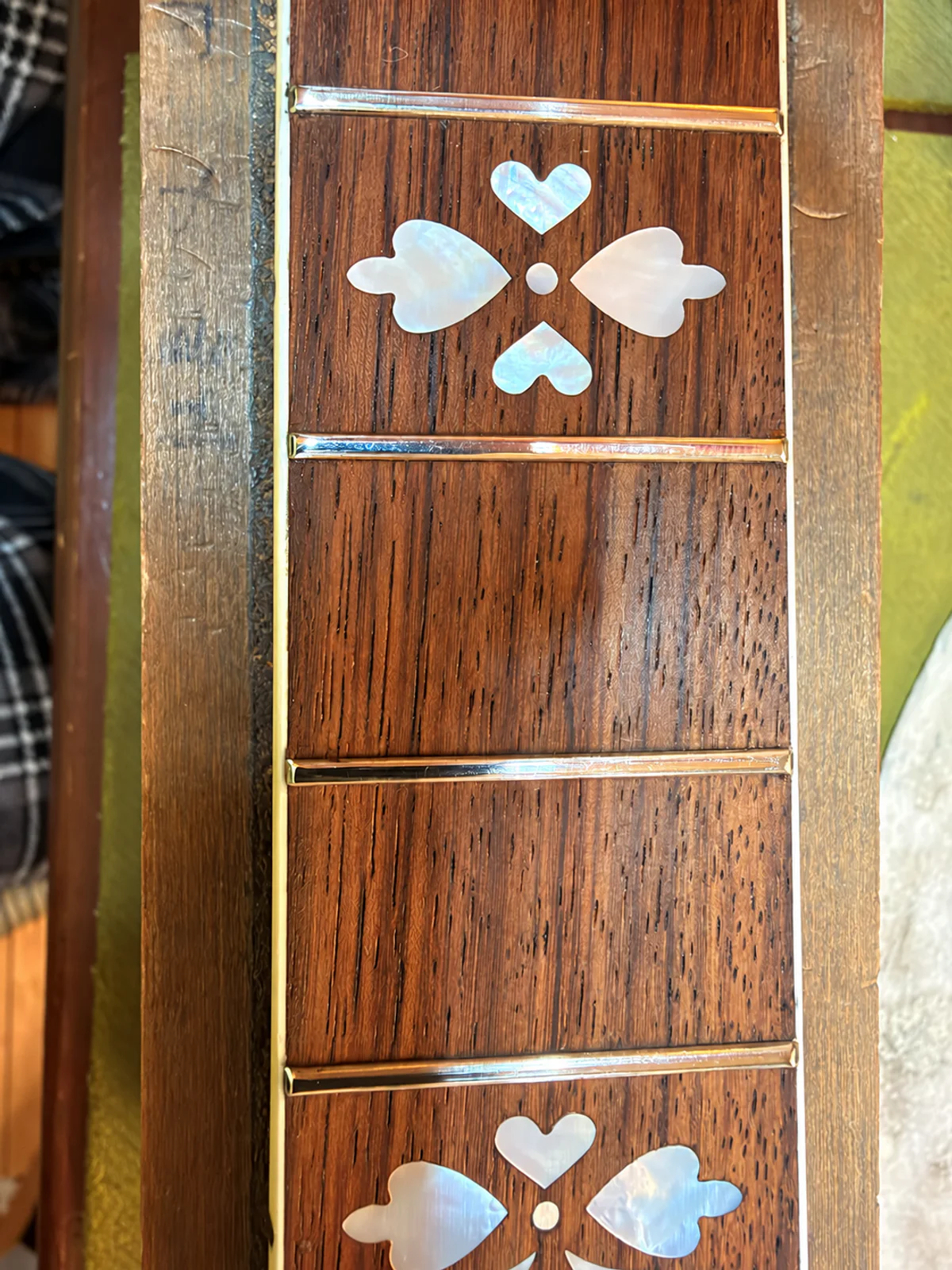
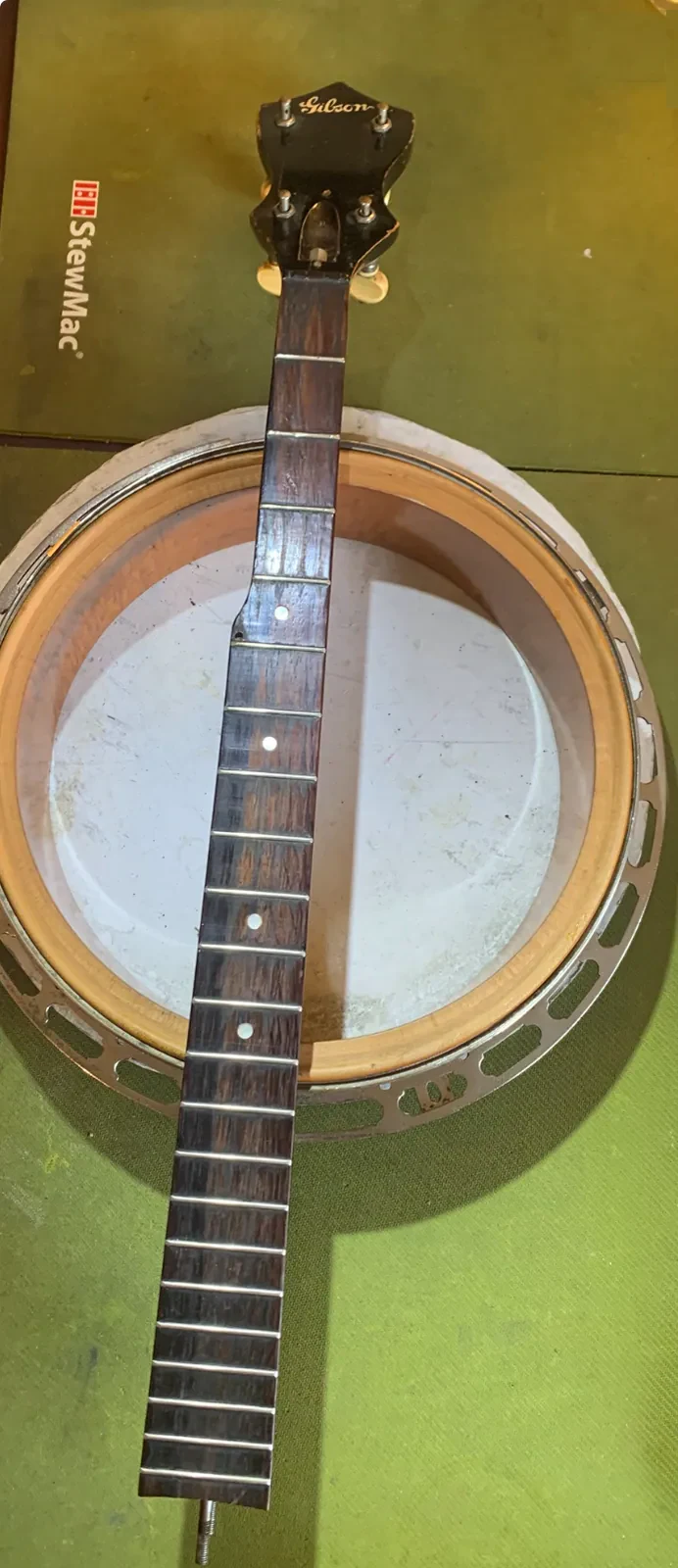
Restoring the original five-string neck of a 1926 Gibson RB-00
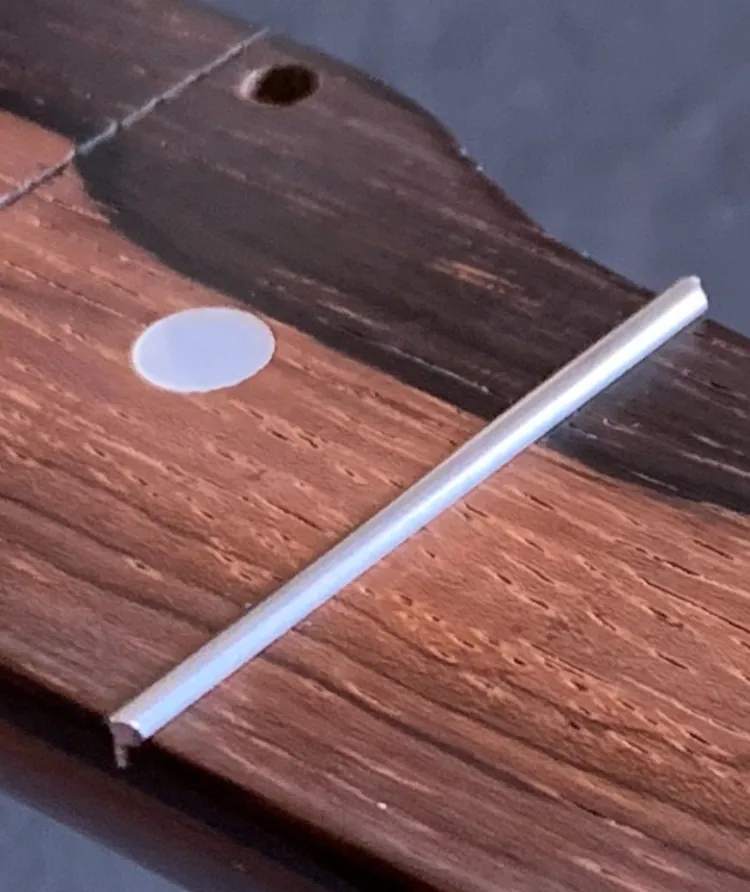
This original five-string Gibson RB-00 neck was unplayable when it arrived at my shop. It had seen a great deal of playing over nearly 100 years, but in recent decades the neck had begun to warp badly, and the frets were completely worn out.
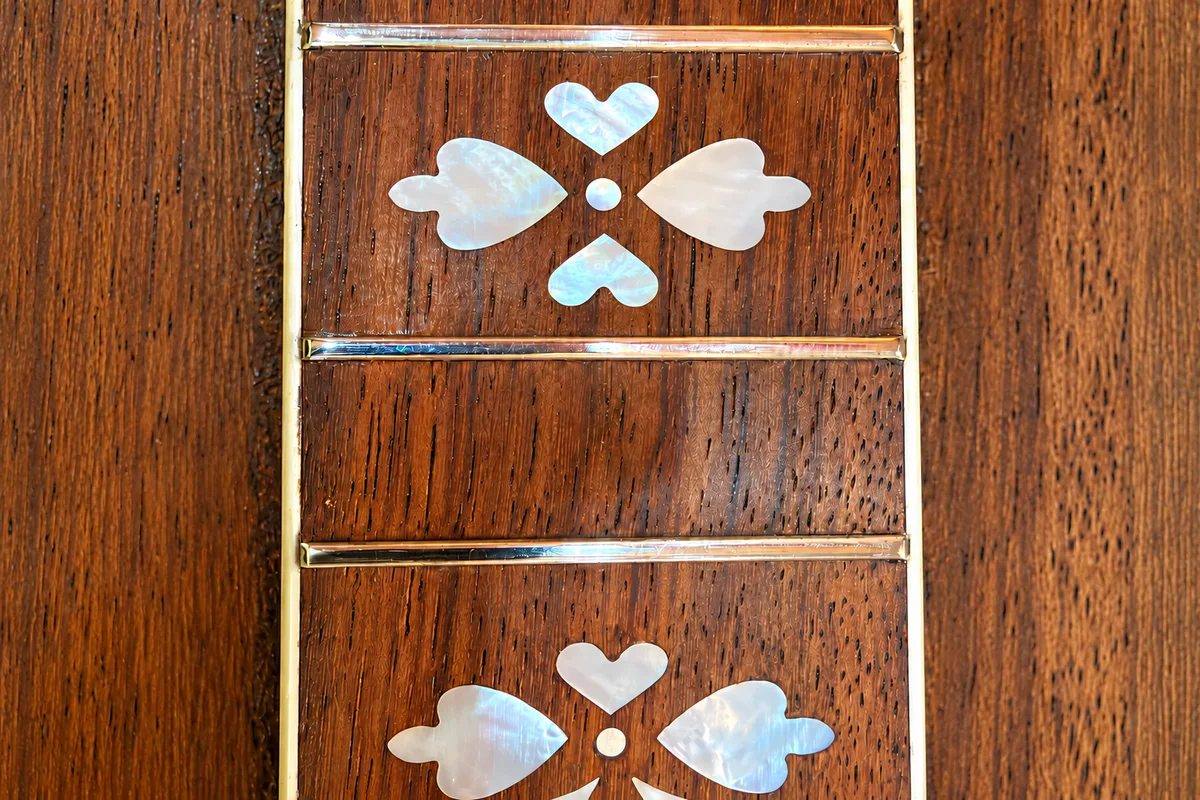
Beneath all that wear and tear was one of the most beautiful Brazilian rosewood fingerboards I have had on the workbench.
Careful fretwork brought the neck back without taking away the character it had earned over nearly a century. The finished frets are stable, level, accurately crowned, and polished smooth. Most importantly, the banjo is playable again, and the owner can enjoy the sound and feel of this remarkable old neck for many years to come.
 View larger image
 View larger image