From the workbench
Tube-and-Plate vs. One-Piece Gibson Banjo Flanges: What Really Changed?
Gibson’s move to the one-piece flange changed far more than one metal part. It altered the rim, the path of head tension, long-term durability, and the character of the entire pot assembly.
The short answer
Gibson’s tube-and-plate and one-piece flange systems perform many of the same basic jobs, but they do so through substantially different structures. The tube-and-plate system uses a hollow metal tube supported by a turned wooden bead on a full-thickness rim, with a separate perforated plate extending outward toward the resonator. The bracket hooks pass from the tension hoop through aligned openings in the tube and plate and are secured by bracket nuts underneath.
The later one-piece flange combines the hook-bearing structure and resonator flange into a single die-cast zinc-alloy part. To accommodate that casting, Gibson changed the rim profile and removed considerably more wood from its lower outside edge.
Structurally, the tube-and-plate system is generally the more durable and forgiving design. Tonally, however, neither flange can be declared universally better. The flange, rim, tone ring, head, bridge, resonator, neck fit, setup, and player all work together. Many tonal qualities commonly credited to the flange are actually the result of several construction changes that occurred around the same time.
How the tube-and-plate system works
Gibson began using the tube as an alternative to individual bracket shoes before adding the separate plate that completed the familiar full-resonator appearance. When the full-resonator Mastertone took shape in 1925, the tube and perforated plate became the construction now commonly called a tube-and-plate flange, two-piece flange, or TPF.
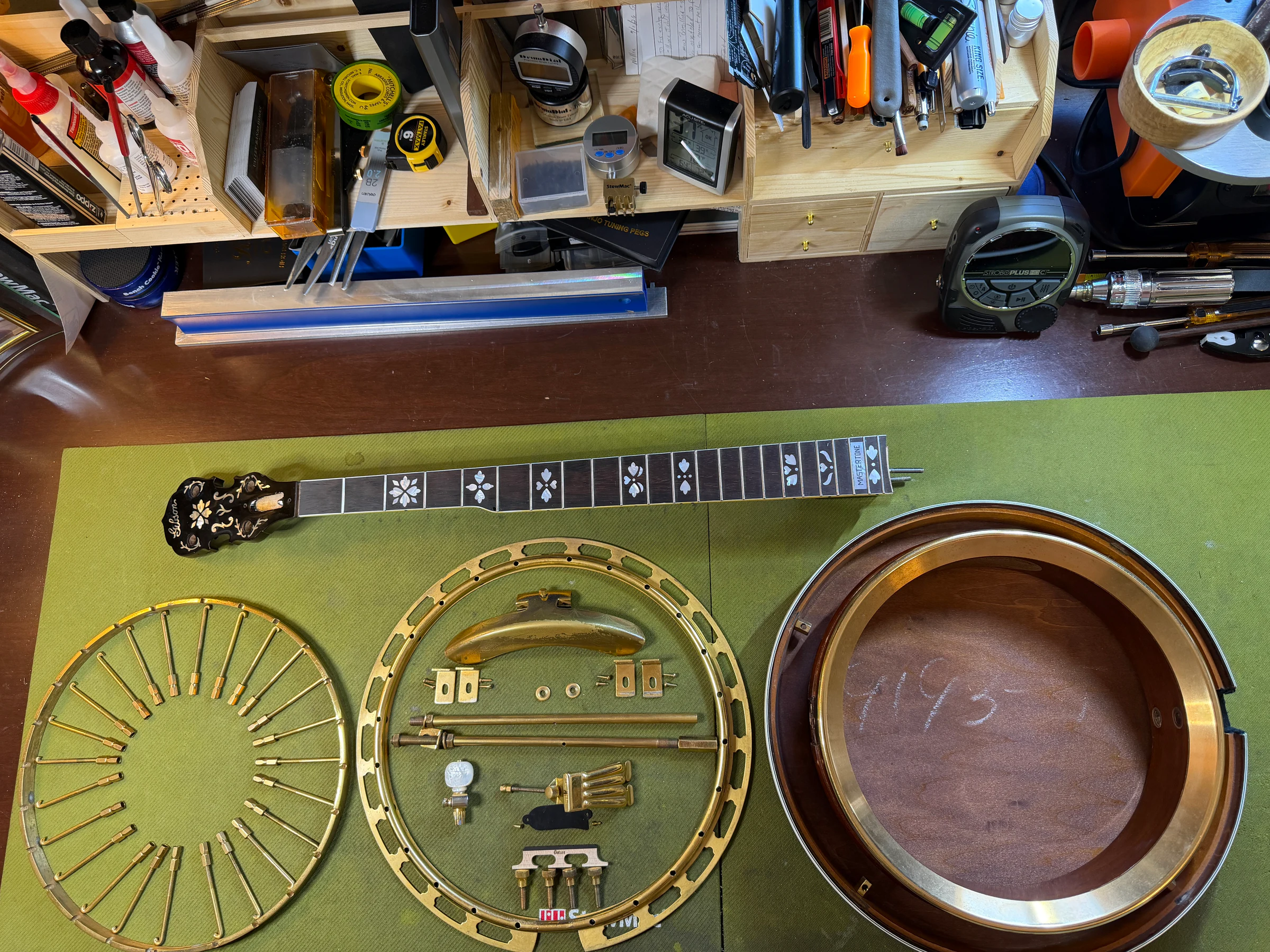
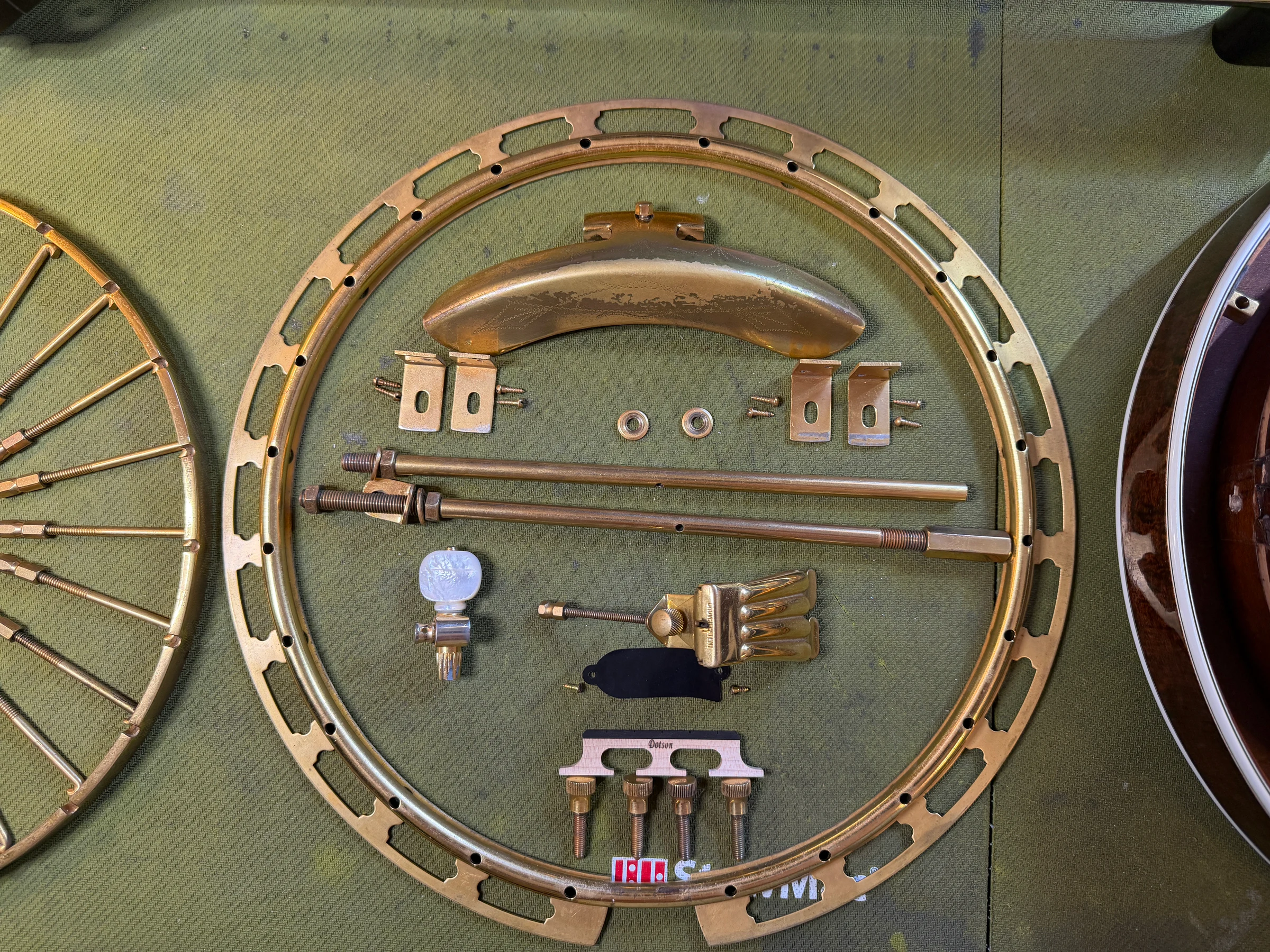
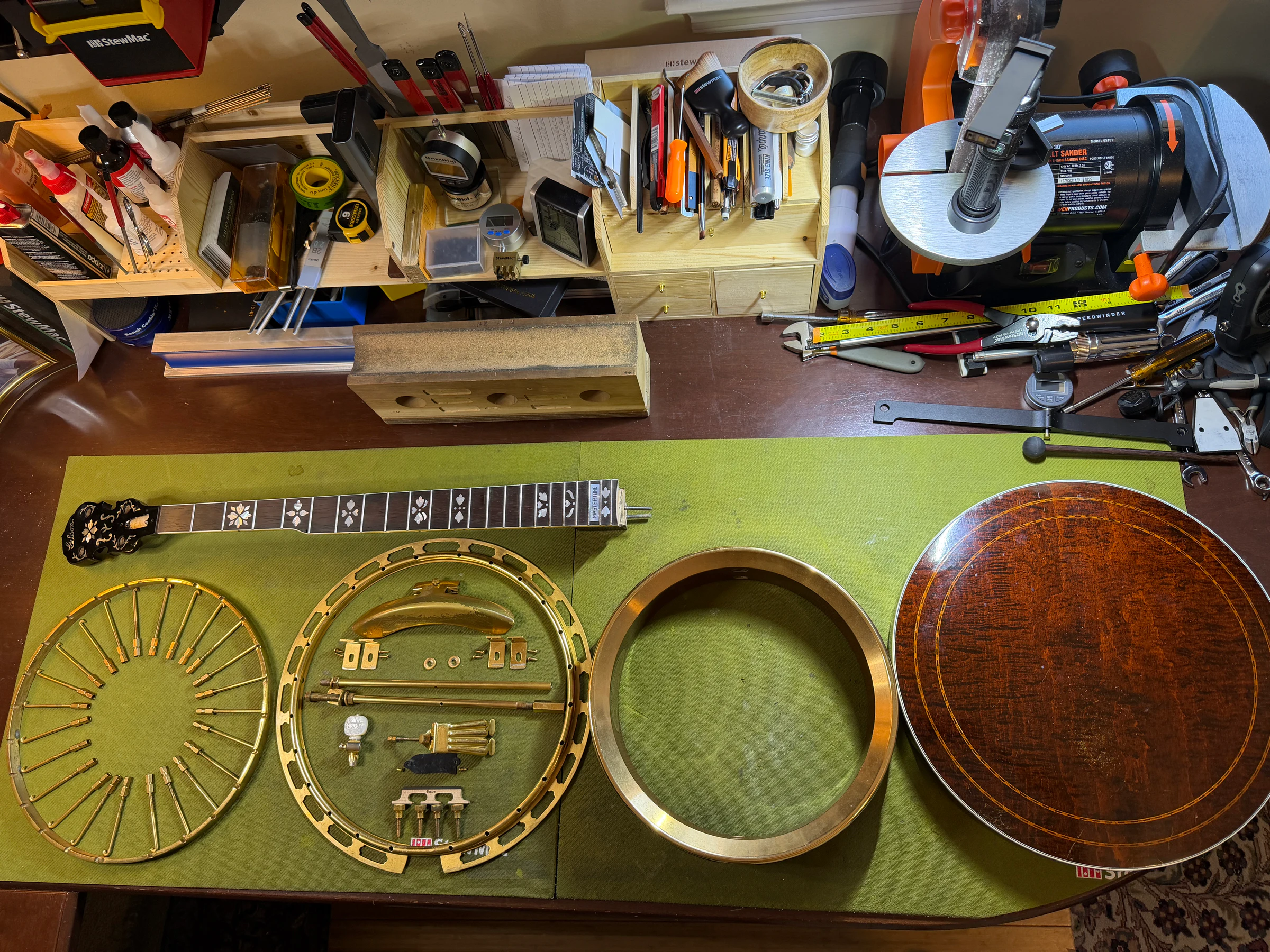
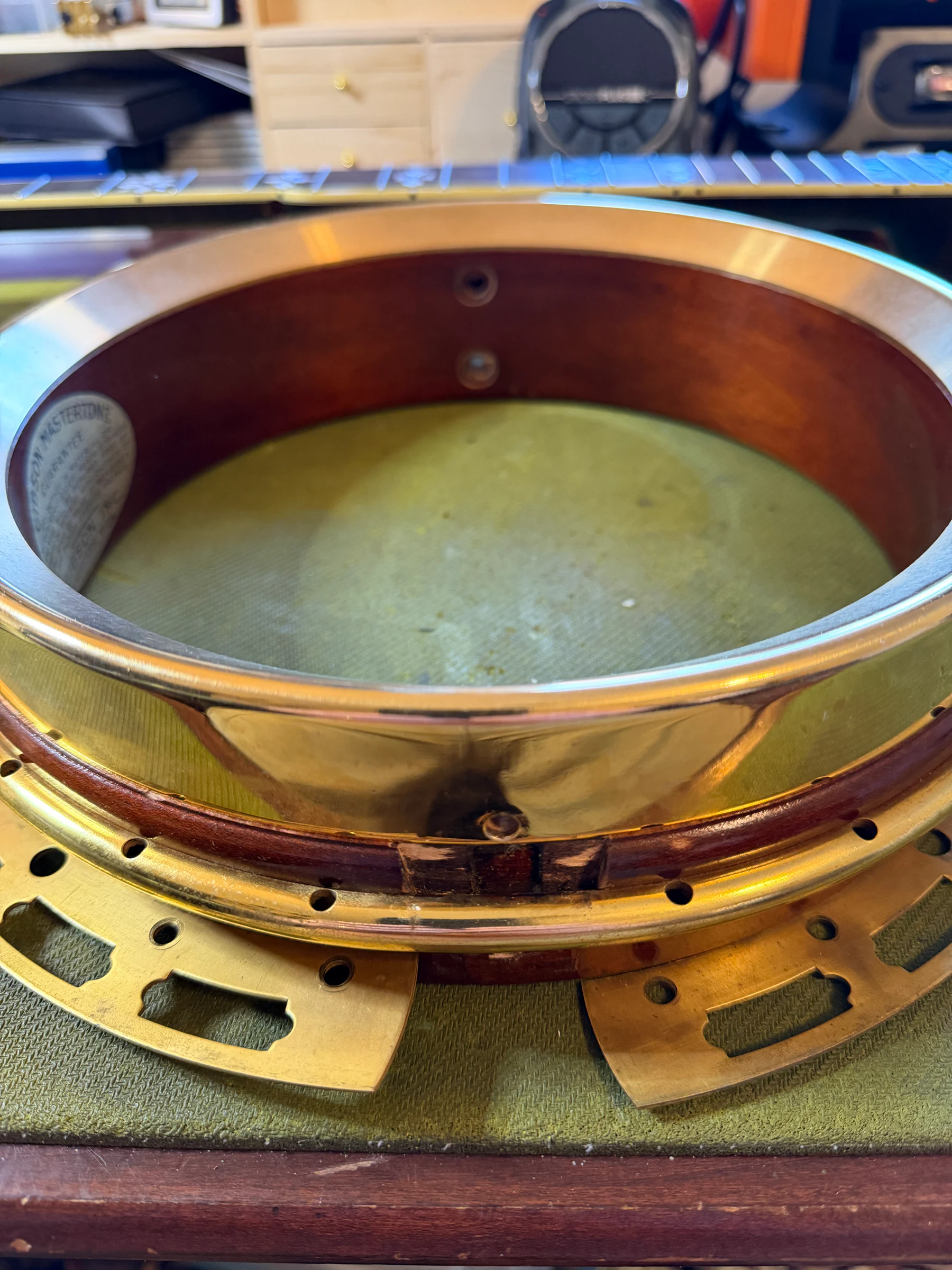
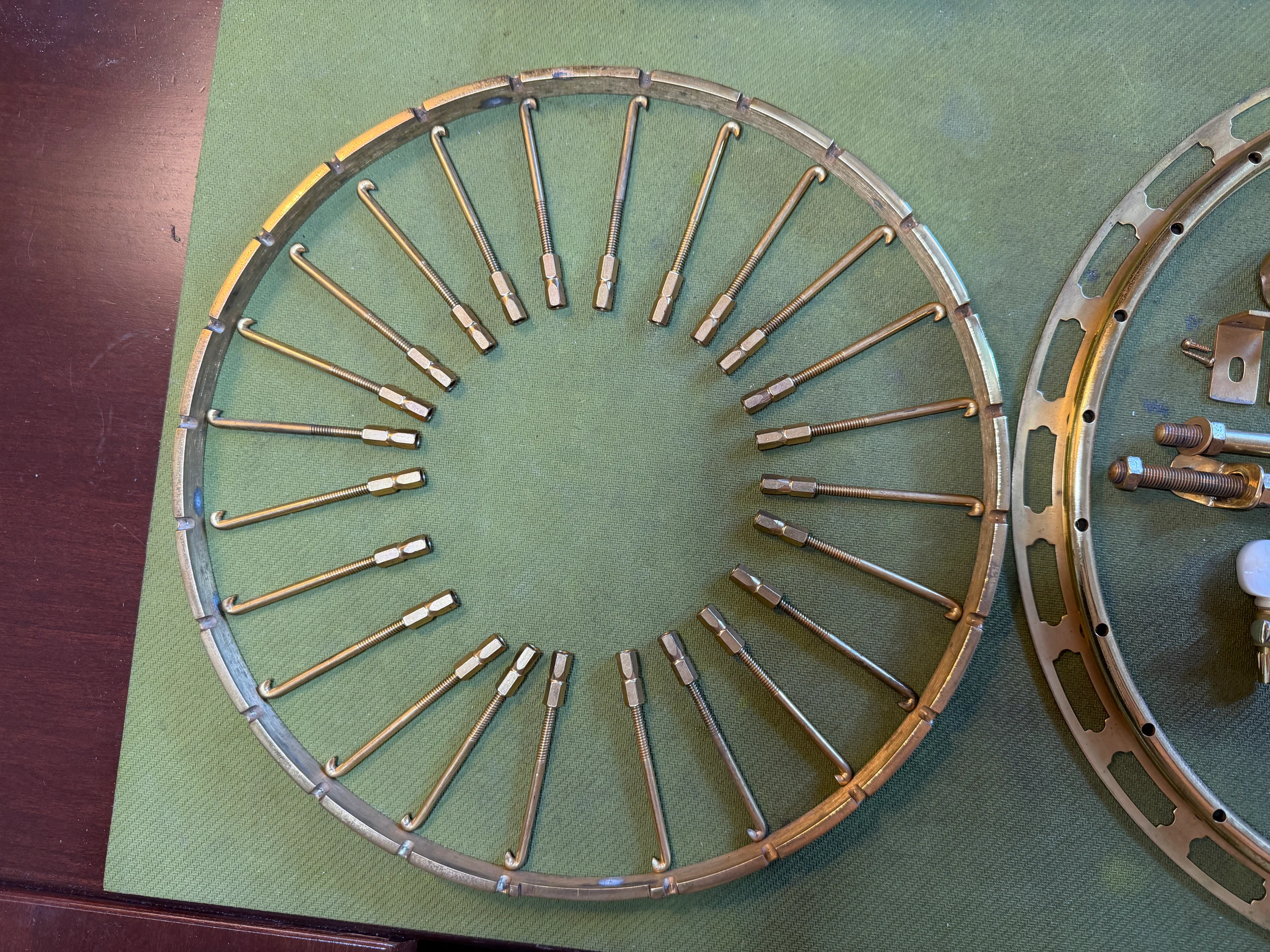
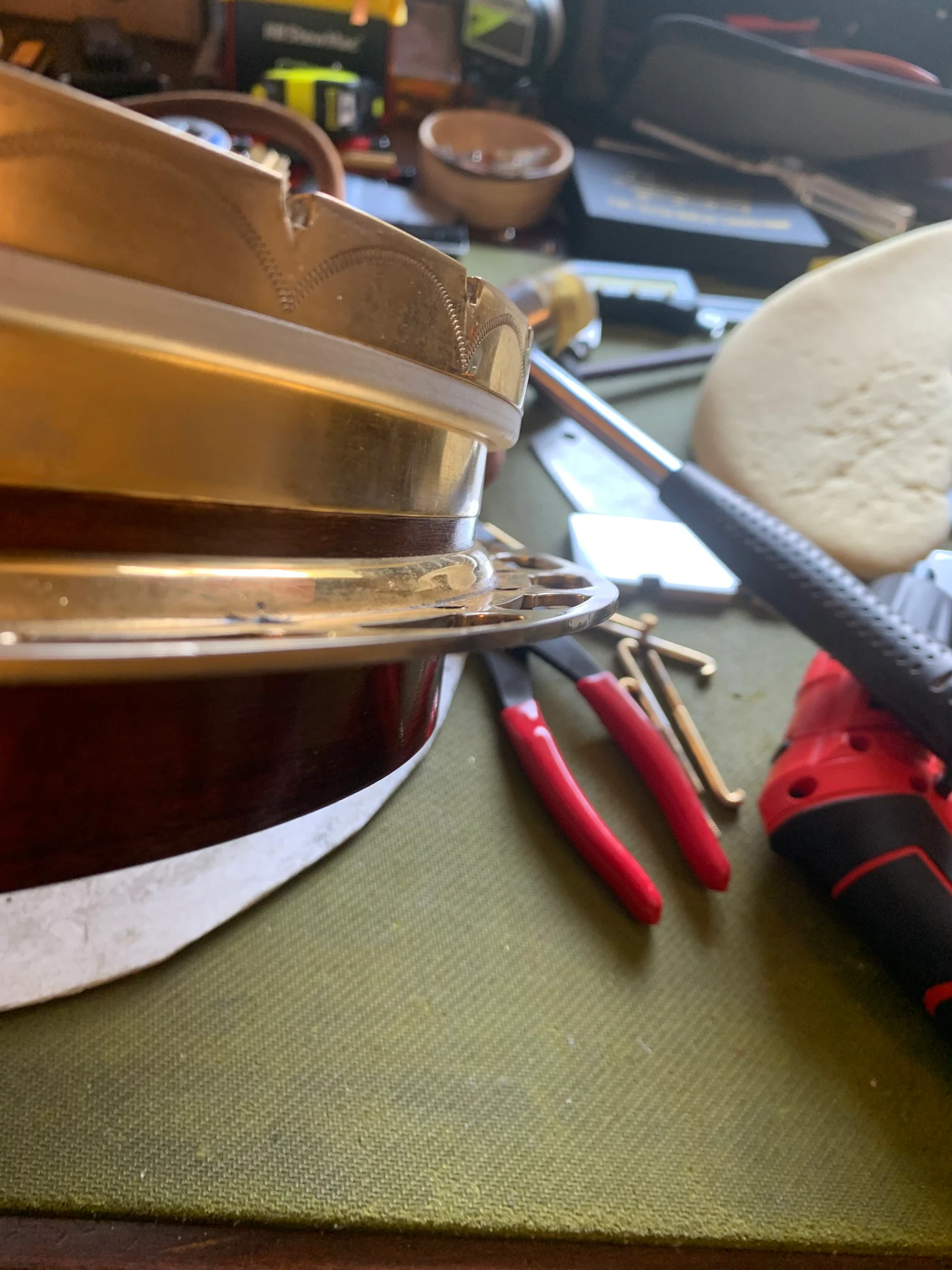
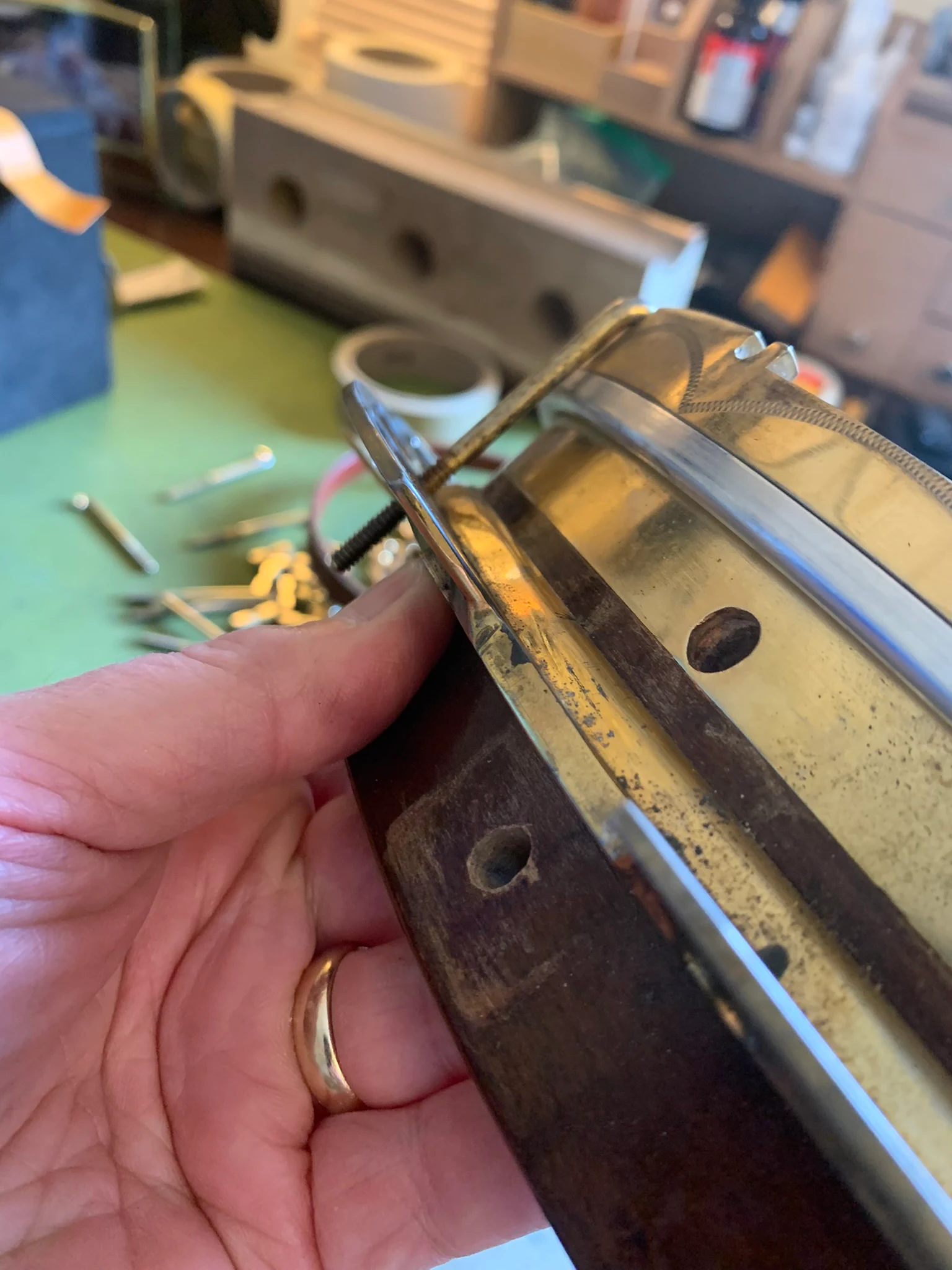
The hollow tube encircles the rim and rests against a rounded wooden bead turned into its outside surface. The bracket hooks engage the notches in the tension hoop, extend downward through aligned openings in the tube and plate, and are secured by bracket nuts beneath the assembly. Tightening the nuts pulls the tension hoop downward and tensions the head. The tube carries and distributes most of that mechanical load around the wooden bead.
The plate fills the opening between the rim and resonator, provides sound openings, and helps create the finished appearance of a resonator banjo. Because the tube and plate are separate, the comparatively thin plate is not required to perform the entire structural job by itself.
Another important difference lies in the wooden rim. Tube-and-plate Mastertones generally retained a full-thickness rim below the tone ring. Many late-1920s examples used a substantial four-ply maple rim with the added bead needed to support the tube. Gibson could therefore maintain considerable wood mass through the lower portion of the pot.
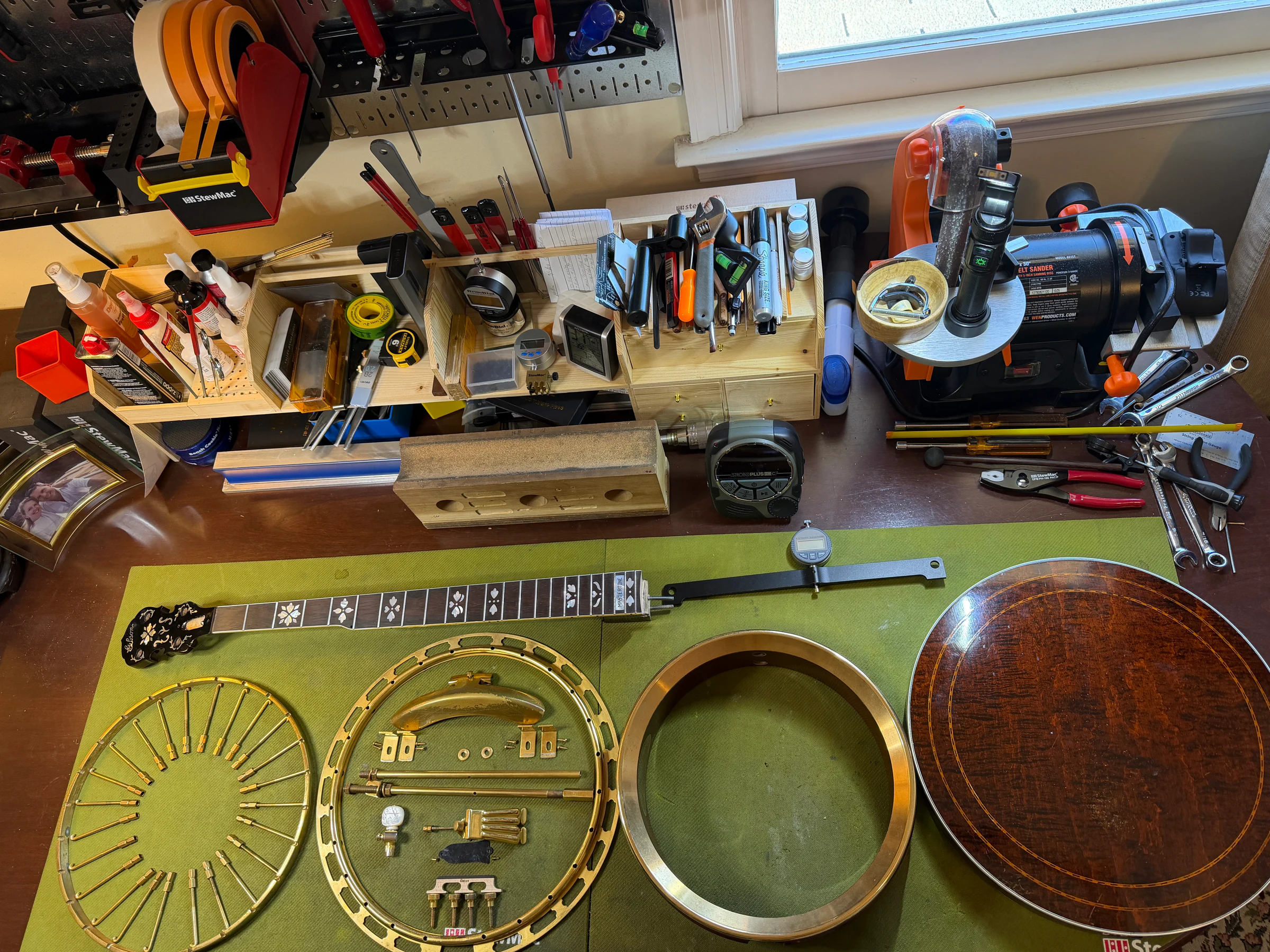
How the tube-and-plate system works photographs
 View larger image
1 of 8
What changed with the one-piece flange
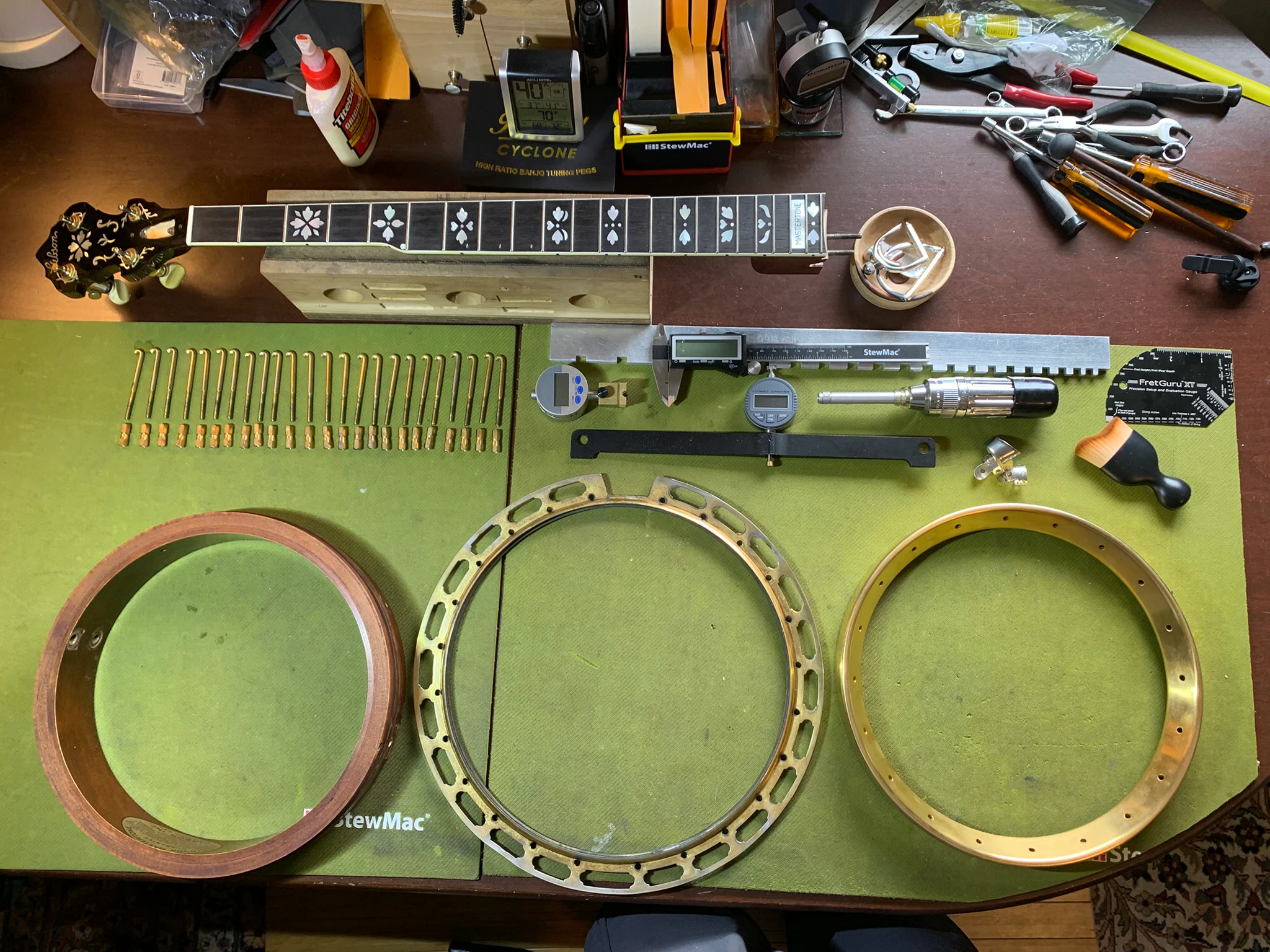
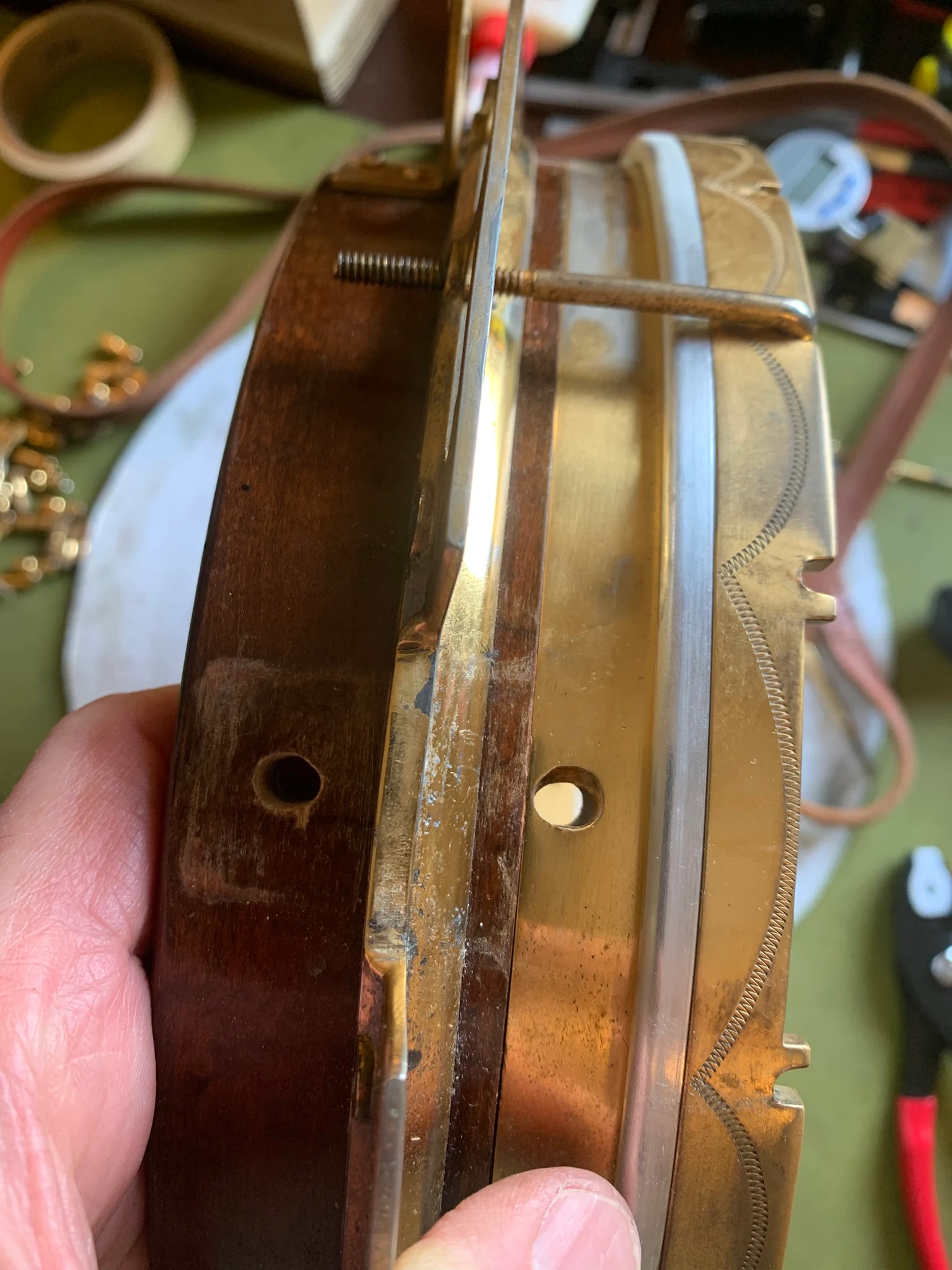
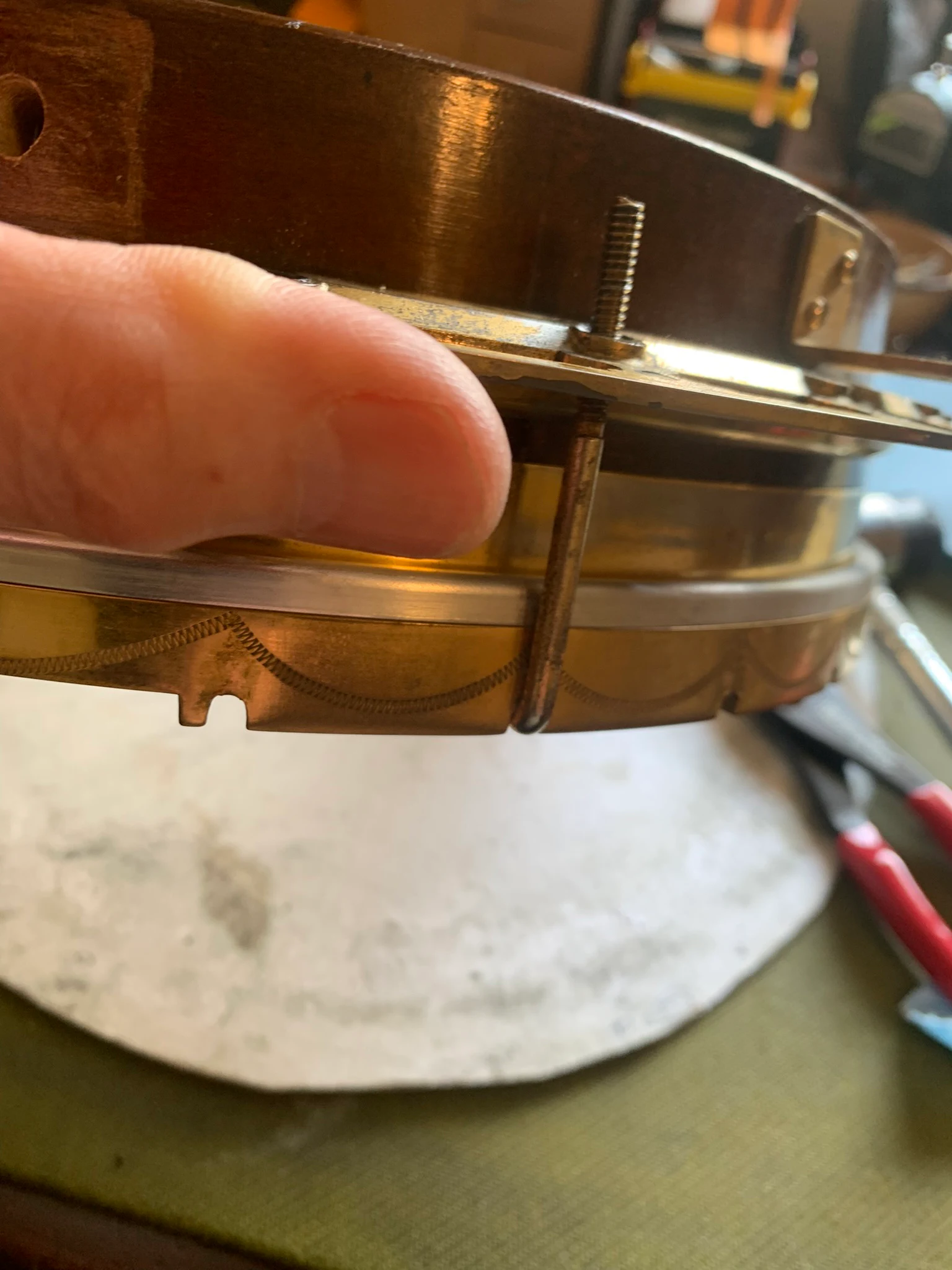
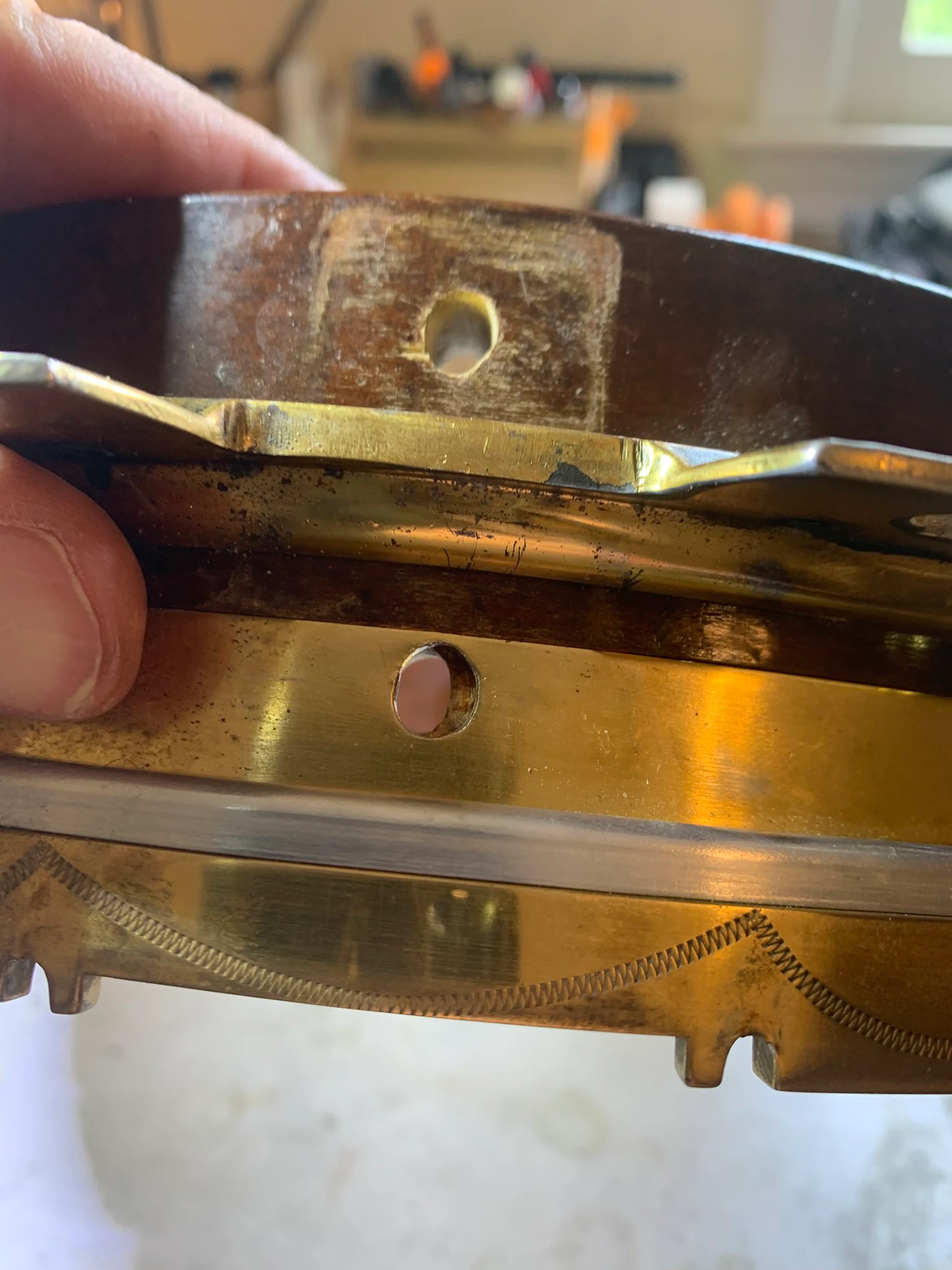
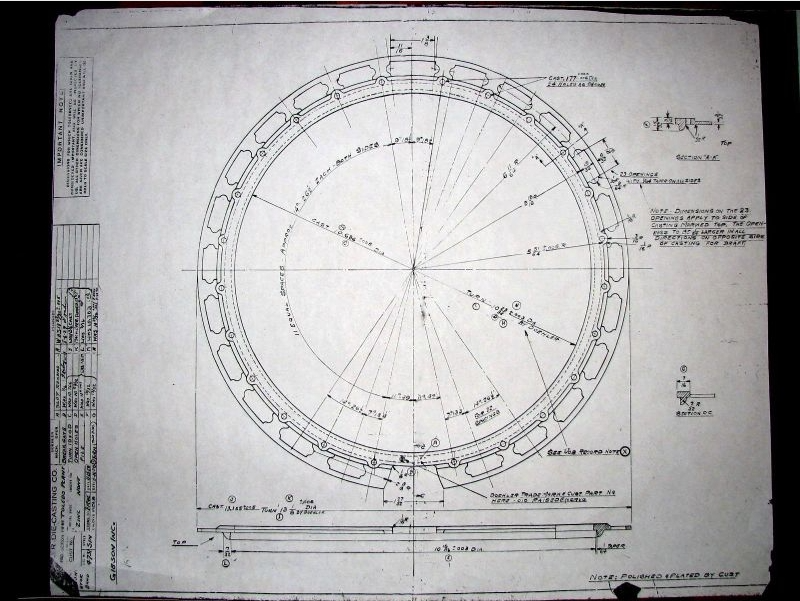
Bill Evans’ 1929 Gibson Granada is a first-year example of Gibson’s one-piece-flange production, even though its exterior can look deceptively similar to the earlier tube-and-plate design. The surviving Doehler Die Casting production drawing for Gibson’s one-piece flange is dated November 15, 1928. Early production examples began appearing in 1929, followed by several engineering revisions as Gibson and its supplier worked through the requirements of the new casting. Tube-and-plate and one-piece construction overlapped during the transition, so the change did not occur across every model on one exact date.
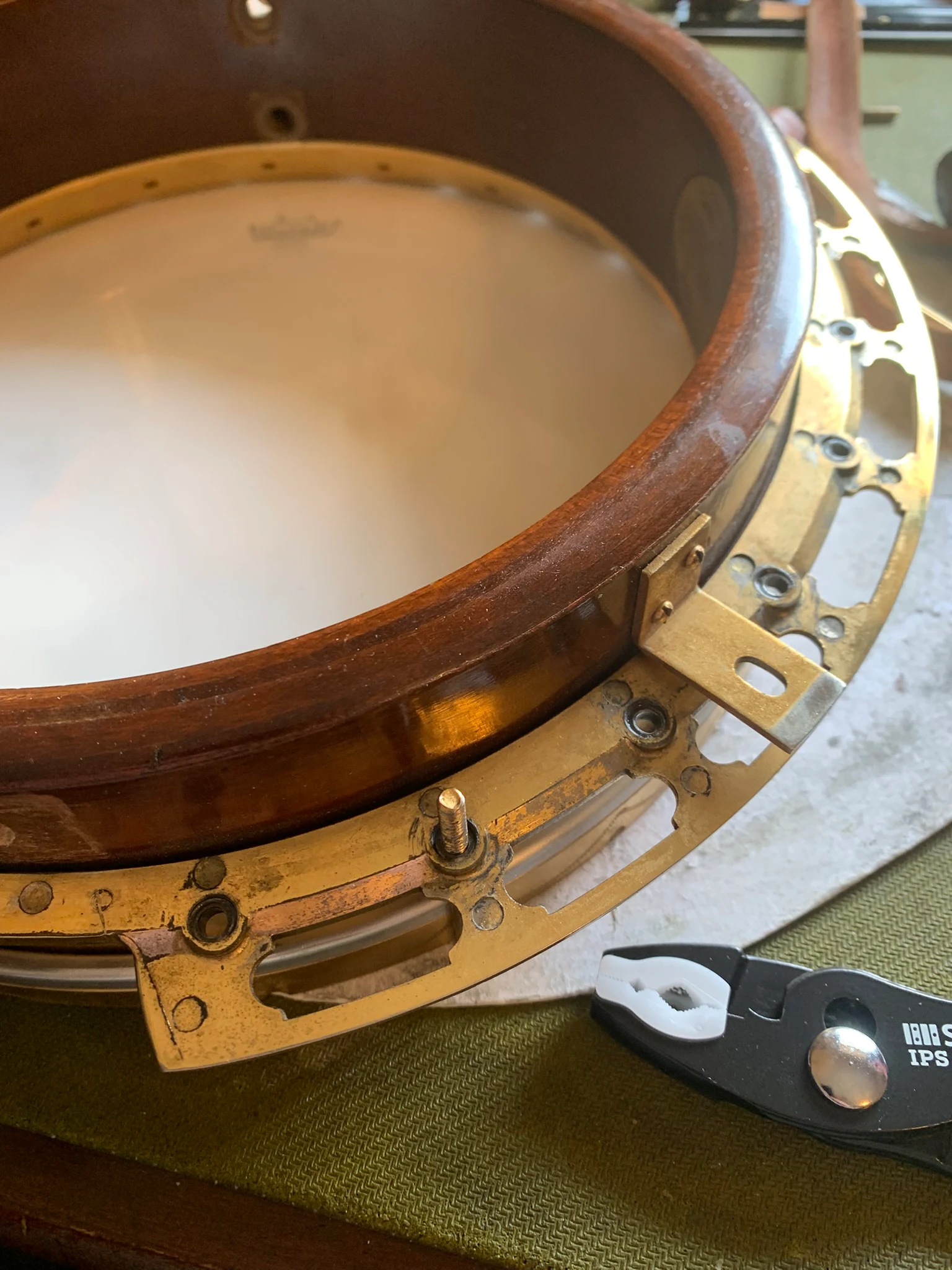
The one-piece flange combined the hook-bearing ledge and the wide resonator flange into a single casting. The hooks passed through openings in this casting and were secured by nuts below, much as they had been in the earlier assembly. The major difference was that the one-piece casting now performed the jobs previously divided between the tube and plate. This simplified the number of separate parts, but it also required a different rim profile.
Instead of leaving a full-thickness lower rim with a wooden bead supporting the tube, Gibson turned down the outside of the lower rim so the one-piece flange could slide over it. Many one-piece-flange Mastertones consequently used a three-ply rim with a noticeably thinner lower skirt. That change altered the relationship between wood and metal throughout the pot.
The one-piece flange was not merely a more convenient version of the same structure. It produced a different rim, a different distribution of mass, and a different way of carrying the continuous load created by the tensioned head.
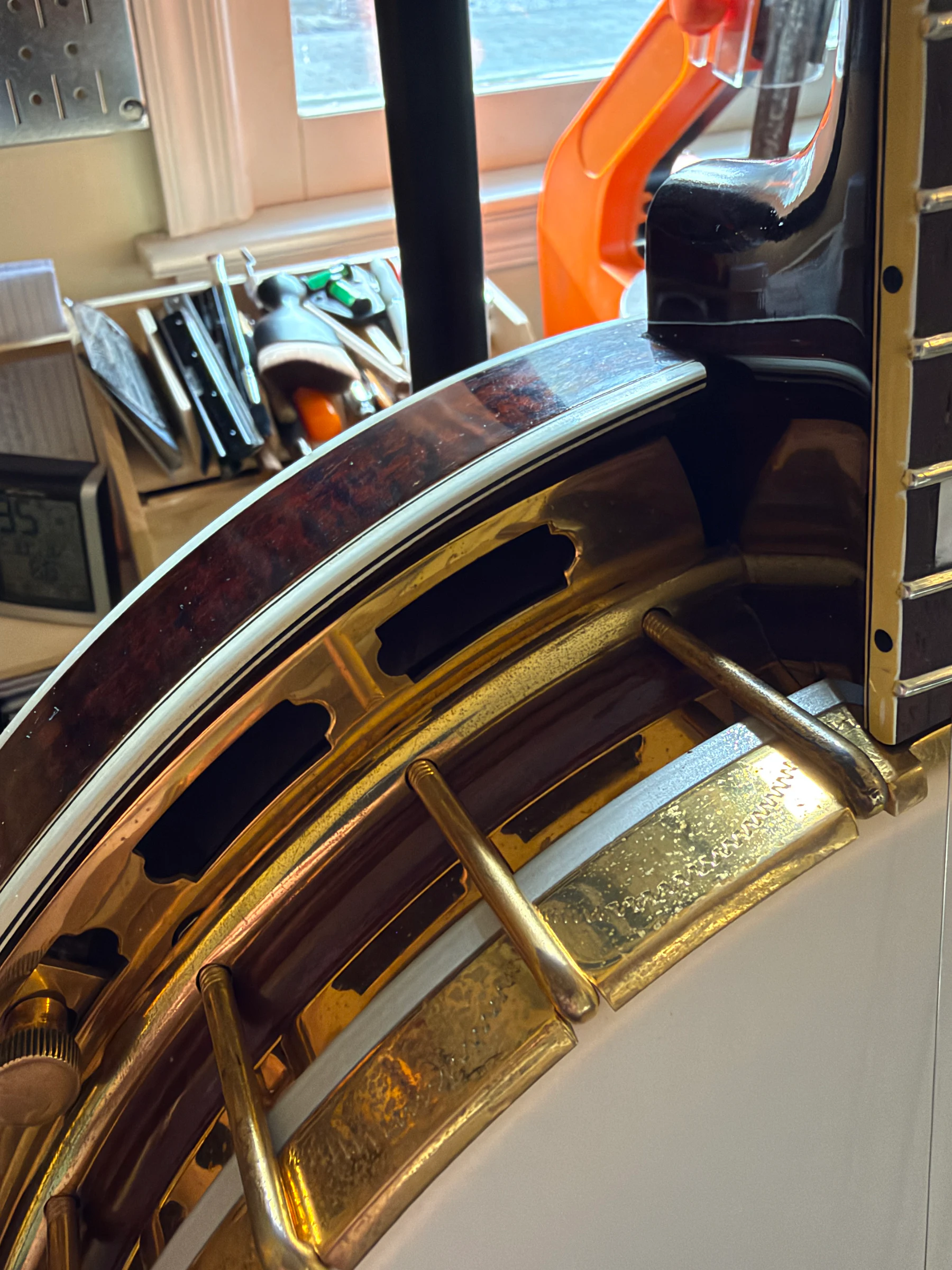
What changed with the one-piece flange photographs
 View larger image
1 of 8
Stability, repairability, and longevity
If the question is strictly structural durability, the tube-and-plate design generally has the advantage. The hook-bearing tube is mechanically simple, strong, and supported continuously by the wooden bead around the rim. The separate plate may become bent, corroded, or damaged, but it does not have to carry the entire hook load by itself. Because it is a separate component, the plate can also be removed for inspection without eliminating the tube that supports the tension hardware.
The full-thickness tube-and-plate rim retains more wood through its lower section and is generally less vulnerable to the distortion that can occur when coordinator rods are used too aggressively. This does not make it indestructible. The wooden bead can be damaged, the rim can become oval, laminations can separate, and original plated hardware still requires careful handling. Nevertheless, the basic arrangement has proven remarkably durable.
The one-piece flange introduced a different long-term concern. Prewar examples were die-cast from a zinc-based alloy commonly described as pot metal. Under decades of continuous head tension, some castings gradually pull upward, distort around their hook openings, or become brittle enough to crack. The earliest 1929 one-piece flanges deserve especially close examination because the design was revised within its first year of production.
Later castings were generally more robust, but no surviving flange should be judged by its date alone. Casting quality, fit, head tension, rim condition, handling, prior repairs, and almost a century of accumulated stress all matter.
A warped one-piece flange can trap the hooks, prevent the tension hoop from moving evenly, and make routine head replacement surprisingly difficult. Replacement is not always simple because prewar flange dimensions changed, and an old wooden rim and its original flange may have gradually become slightly oval together. Forcing a modern replacement onto that rim—or cutting original wood merely to make it fit—can create more problems than it solves.
Does one design sound better?
This is where the comparison becomes less definite. Some experienced builders and players associate tube-and-plate banjos with power, clarity, and sustain. The full-thickness rim is heavier and stiffer, and the hook-bearing tube distributes its load around a substantial wooden structure. Roger Siminoff has described this heavier rim construction as one reason some tube-and-plate banjos produce considerable power and sustain.
Other players favor the response associated with the thinner-rim, one-piece-flange flathead Mastertones that became central to bluegrass. Those instruments are often described as having a quick response, strong fundamental note, dry character, and the ability to produce clear separation when played hard.
Both descriptions can be useful, but neither should be treated as a rule. Most surviving tube-and-plate Mastertones were built with ball-bearing or raised-head tone systems, while many of the one-piece-flange banjos sought by bluegrass players have flathead tone rings.
Rim construction, tone-ring profile and weight, wood, head tension, bridge, tailpiece, neck fit, resonator, and setup are all changing at the same time. Comparing an archtop tube-and-plate banjo with a flathead one-piece-flange banjo does not isolate the sound of the flange. Even two banjos with similar parts can respond differently because of rim condition, hardware fit, neck connection, age, and setup. The flange influences the structure, mass, and behavior of the pot, but it does not have a single sound independent of everything around it.
The honest answer is that both designs can produce exceptional professional instruments. The tube-and-plate system should not be dismissed as an earlier, inferior version, and the one-piece flange should not be assumed to guarantee classic prewar tone merely because it resembles the construction used in several famous bluegrass banjos.
Two Granadas from opposite sides of the transition
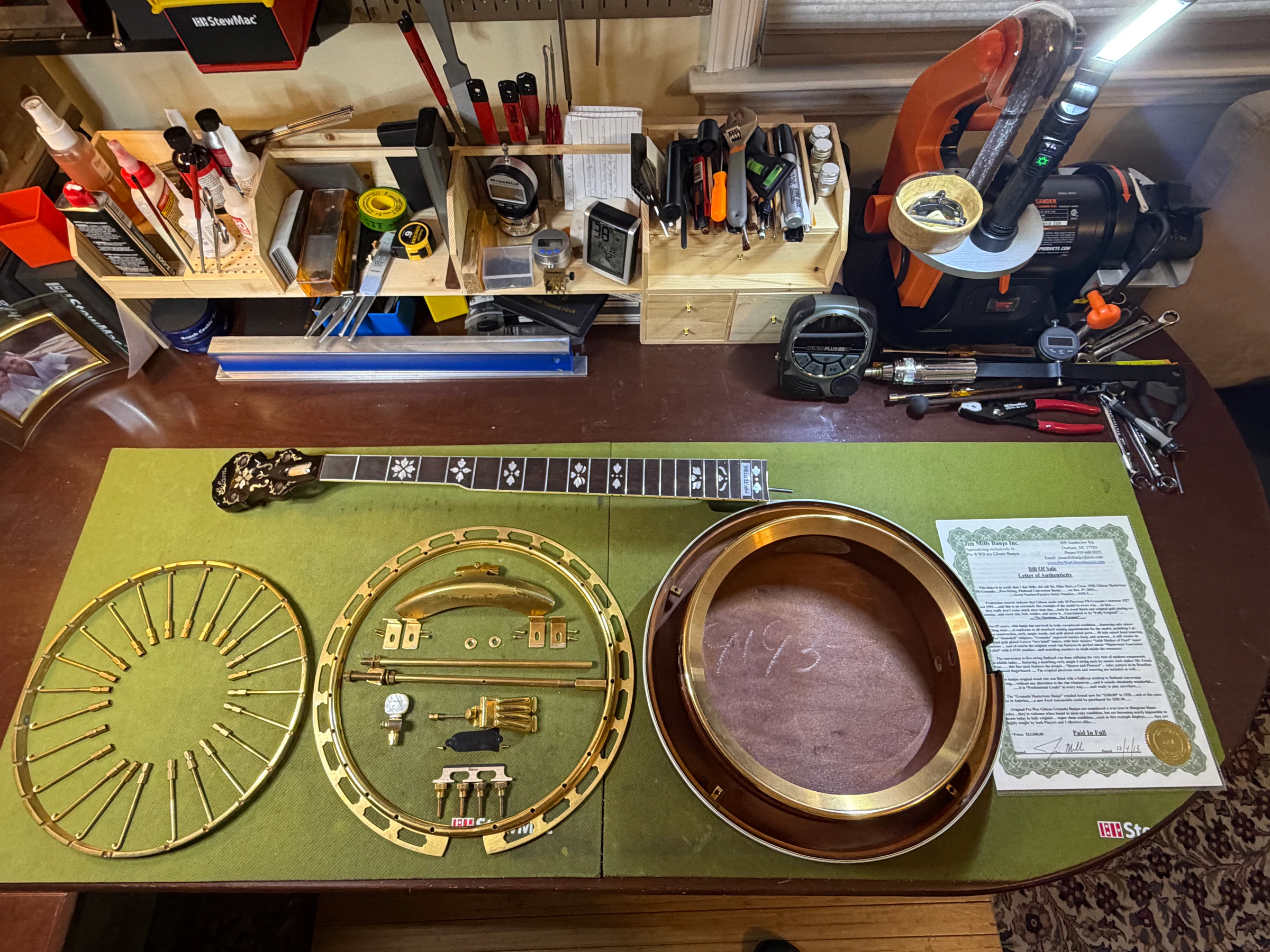
Jason Hathcock’s 1928 Gibson Granada provides an excellent example of Gibson’s mature tube-and-plate construction. Its photographs can show the full system clearly: the wooden rim bead, hollow tube, separate perforated plate, hook path, and bracket nuts underneath. This is especially valuable because the tube and plate are difficult to understand from an exterior photograph alone. Once the pot is disassembled—or photographed carefully from above, outside, and underneath—the logic of the design becomes much easier to see.
Bill Evans’ 1929 Gibson Granada represents the beginning of the one-piece-flange period. Its original flange had pulled upward so severely that most of the brackets could no longer move freely. The head could not be removed or tensioned evenly without first addressing how the distorted flange, hooks, tension hoop, and rim were interacting. That project demonstrates both the historical importance and the vulnerability of the early design.
The correct response was not to force the casting flat or automatically replace it. Each bracket was removed, cleaned, inspected, and fitted to work safely with the original flange as it exists today. That preserved the historic gold-plated hardware while restoring even head tension and dependable professional playability.
Together, these two projects allow the comparison to move beyond diagrams and generalizations. They show how the different assemblies were actually built, how they aged, and what each requires at the workbench.
Which flange is better?
The answer depends on what “better” means. For structural durability and resistance to long-term distortion, the tube-and-plate system generally has the advantage. Its hook-bearing tube is strong, its plate is separately serviceable, and its rim retains more wood through the lower portion of the pot.
For historical bluegrass association and market desirability, the one-piece-flange flathead Mastertone has the stronger reputation. That reputation was shaped by extraordinary instruments and influential players, but it does not prove that every one-piece-flange banjo sounds better than every tube-and-plate example.
For preservation, originality matters more than preference. Converting a tube-and-plate rim to accept a one-piece flange requires removing original wood and changing the neck-heel relationship. It is not a harmless hardware substitution.
Likewise, replacing an original one-piece flange without understanding its fit, dimensions, and relationship with the rim can compromise the history, function and value.
The best flange is usually the correct, stable, properly fitted system already belonging to the banjo. The goal should be to understand how it was built, preserve what can safely remain in service, document any necessary replacement, and set up the complete instrument around the player’s touch and tonal goals.